
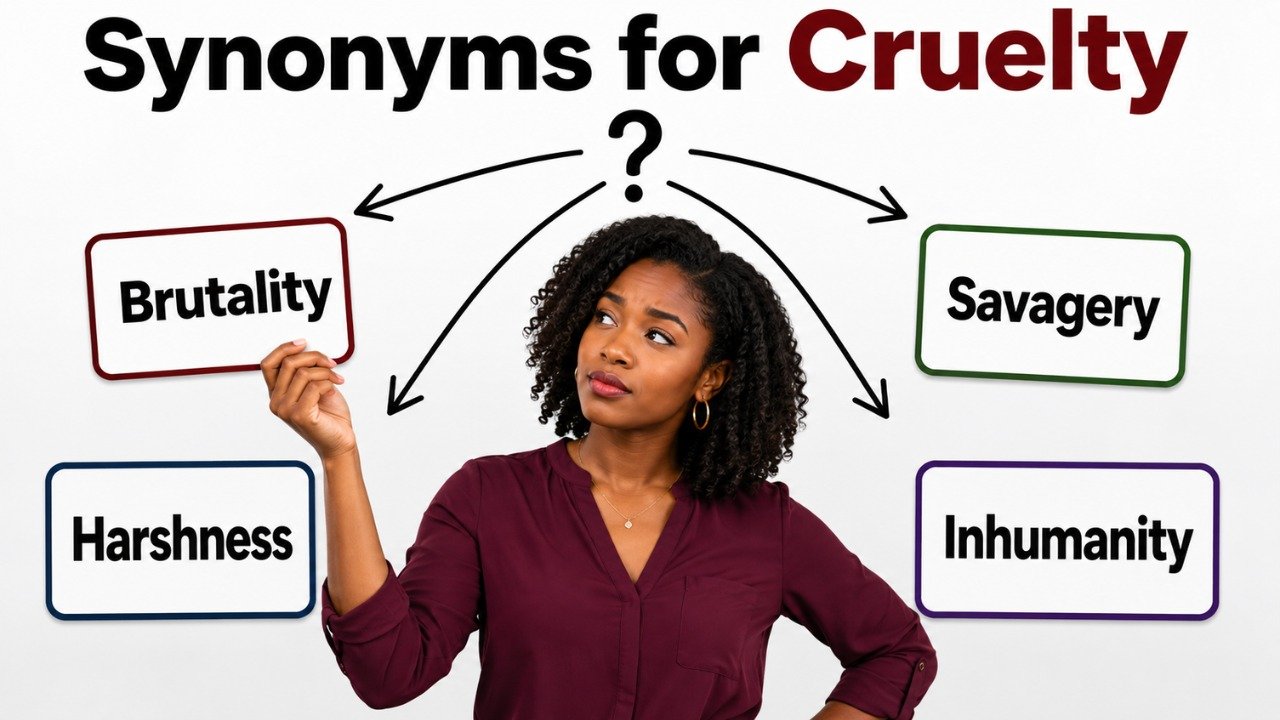
Quick Answer: The best synonyms for cruelty are brutality, harshness, inhumanity, mercilessness, ruthlessness, callousness, barbarity, savagery, heartlessness, and viciousness. Use brutality for severe physical violence, harshness for strict or rough treatment, inhumanity for morally shocking behavior, and callousness for emotional coldness. Ruthlessness suits determined behavior without concern for others, while oppression and persecution are better when cruelty comes from power or authority.
Pronunciation and Word Details
Word: Cruelty
Pronunciation: /ˈkruːəlti/
Part of Speech: Noun
Meaning: Behavior that intentionally causes pain, suffering, fear, or distress to another person or living being.
US Pronunciation:
UK Pronunciation:
What Does “Cruelty” Mean?
Cruelty means behavior that causes unnecessary pain, suffering, fear, or emotional distress. It is a noun and can describe a harmful action, an unkind attitude, or a repeated pattern of mistreatment.
Cruelty may involve physical violence, emotional harm, neglect, humiliation, punishment, or the misuse of power. It can be directed toward people, animals, groups, or communities.
Physical Context: The report described the cruelty suffered by the prisoners.
Emotional Context: Her deliberate silence felt like an act of cruelty.
Social Context: The novel explores cruelty caused by prejudice and oppression.
Personal Context: He regretted the cruelty of his earlier remarks.
The word can refer to one specific act or to a general quality in someone’s behavior.
Specific Act: Leaving the injured animal without help was an act of cruelty.
General Quality: His cruelty made others afraid to speak honestly.
Meaning, Tone, and Context of “Cruelty”
Cruelty has a strong and negative tone. It expresses moral judgment and suggests that the harmful behavior is unnecessary, deliberate, careless, or deeply insensitive.
The word is common in formal writing, news reports, essays, legal discussions, literature, psychology, history, and everyday conversation.
Formal Tone: The investigation uncovered a pattern of cruelty and abuse.
Emotional Tone: She could not understand such cruelty toward an innocent child.
Academic Tone: The essay examines how power can encourage cruelty and oppression.
Conversational Tone: There was no excuse for his cruelty.
Cruelty is stronger than unkindness. Unkindness may describe rude, thoughtless, or unfriendly behavior, while cruelty usually involves serious suffering or a deliberate wish to cause harm.
Cruelty can also describe emotional indifference. Someone may act cruelly by ignoring another person’s pain, humiliating them, or refusing help when assistance is clearly needed.
When and How to Use “Cruelty”
For Physical Harm
Use cruelty when someone intentionally causes physical pain or allows unnecessary suffering.
Example: The survivors spoke about the cruelty they had experienced.
For Emotional Harm
Use cruelty for words or actions designed to humiliate, frighten, isolate, or emotionally injure someone.
Example: Mocking her grief was an act of emotional cruelty.
For Abuse of Power
Use cruelty when a powerful person, institution, or group mistreats those with less power.
Example: The ruler maintained control through fear and cruelty.
For Animal Mistreatment
Use cruelty when an animal is deliberately harmed, neglected, frightened, or denied proper care.
Example: The abandoned animals showed clear signs of cruelty and neglect.
For Deliberate Unkindness
Use cruelty when ordinary unkindness becomes intentional, repeated, or especially painful.
Example: His public insults revealed unnecessary cruelty.
For Historical or Social Discussion
Use cruelty when examining oppression, persecution, punishment, or violent treatment.
Example: The book records the cruelty inflicted on vulnerable communities.
For Literary Analysis
Use cruelty when discussing a character’s harmful actions, lack of mercy, or moral failure.
Example: The character’s cruelty becomes more obvious as the story develops.
For Moral Judgment
Use cruelty when strongly condemning behavior that causes avoidable suffering.
Example: No personal disagreement can justify such cruelty.
Best Synonyms for Cruelty
Brutality
Synonym: Severe, violent, and physically cruel behavior.
Example: Witnesses described the brutality of the attack.
Harshness
Synonym: Rough, severe, or unsympathetic treatment.
Example: The harshness of the punishment shocked the community.
Inhumanity
Synonym: Behavior that shows a shocking lack of human compassion.
Example: The prisoners were subjected to terrible inhumanity.
Mercilessness
Synonym: A complete absence of mercy or forgiveness.
Example: The mercilessness of the commander frightened everyone.
Ruthlessness
Synonym: Determined behavior that ignores the pain or rights of others.
Example: His ruthlessness helped him gain power but destroyed trust.
Callousness
Synonym: Emotional insensitivity toward another person’s suffering.
Example: Her callousness was clear when she laughed at his distress.
Barbarity
Synonym: Extremely cruel, uncivilized, or violent behavior.
Example: The account revealed acts of shocking barbarity.
Savagery
Synonym: Fierce, uncontrolled, and violent cruelty.
Example: The savagery of the assault left the witnesses speechless.
Heartlessness
Synonym: A lack of kindness, sympathy, or emotional concern.
Example: Refusing help showed remarkable heartlessness.
Viciousness
Synonym: Deliberately harmful, violent, or spiteful behavior.
Example: The viciousness of the comments deeply affected her.
50 Synonyms for Cruelty With Short Meanings
- Brutality: Severe and violent cruelty.
- Harshness: Rough or unsympathetic treatment.
- Inhumanity: A shocking absence of compassion.
- Mercilessness: A complete lack of mercy.
- Ruthlessness: Harmful determination without concern for others.
- Callousness: Insensitivity toward pain or suffering.
- Barbarity: Extremely cruel and uncivilized behavior.
- Savagery: Fierce and violent cruelty.
- Viciousness: Deliberately harmful or aggressive behavior.
- Heartlessness: Lack of kindness or sympathy.
- Pitilessness: Refusal to show pity.
- Remorselessness: Absence of guilt after causing harm.
- Coldheartedness: Emotional coldness toward suffering.
- Hardheartedness: Unwillingness to show compassion.
- Unkindness: Behavior that lacks kindness or consideration.
- Meanness: Deliberately unpleasant or hurtful behavior.
- Malice: A desire to cause harm.
- Malevolence: Deep ill will toward others.
- Spitefulness: A wish to hurt someone out of resentment.
- Vindictiveness: A strong desire for revenge.
- Sadism: Pleasure gained from causing pain or humiliation.
- Tyranny: Cruel and oppressive use of power.
- Oppression: Systematic cruel or unfair control.
- Persecution: Repeated mistreatment of a person or group.
- Abuse: Harmful or improper treatment.
- Mistreatment: Unfair, cruel, or harmful treatment.
- Ill Treatment: Deliberately poor or harmful treatment.
- Torment: Severe physical or emotional suffering.
- Torture: Intentional infliction of extreme pain.
- Violence: Physical force intended to cause harm.
- Aggression: Hostile behavior directed toward others.
- Hostility: Unfriendly or threatening behavior.
- Intimidation: The use of fear to control someone.
- Bullying: Repeated harm or pressure against a weaker person.
- Exploitation: Unfair use of someone for personal benefit.
- Coercion: Forcing someone through pressure or threats.
- Repression: Harsh control of people or freedom.
- Despotism: Cruel rule by someone with absolute power.
- Barbarism: Brutal and uncivilized conduct.
- Atrocity: An extremely cruel or violent act.
- Ferocity: Fierce and violent intensity.
- Severity: Extreme strictness or harsh treatment.
- Insensitivity: Failure to recognize another person’s feelings.
- Coldness: Lack of warmth, sympathy, or compassion.
- Indifference: Lack of concern about another person’s suffering.
- Wickedness: Morally evil behavior.
- Depravity: Deep moral corruption or cruelty.
- Inhumane Conduct: Behavior that lacks basic compassion.
- Rough Treatment: Physically or emotionally harsh handling.
- Deliberate Harm: Intentional action that causes suffering.
Read Also:
Synonyms for Directed

Synonyms for Cruelty by Context
When Cruelty Means Physical Violence
Brutality, savagery, barbarity, violence, torture, ferocity, and atrocity are strong choices when cruelty involves physical harm.
Cruelty: The cruelty of the attack shocked the public.
Brutality: The brutality of the attack shocked the public.
Savagery: The savagery of the attack shocked the public.
Brutality is the most useful general alternative for severe physical violence. Savagery suggests uncontrolled violence, while atrocity refers to an especially shocking act.
When Cruelty Means Emotional Coldness
Callousness, heartlessness, coldheartedness, insensitivity, coldness, and indifference describe a lack of compassion.
Cruelty: His cruelty was clear when he ignored her pain.
Callousness: His callousness was clear when he ignored her pain.
Heartlessness: His heartlessness was clear when he ignored her pain.
Callousness emphasizes insensitivity. Heartlessness suggests a complete absence of sympathy, while indifference means that someone does not care enough to respond.
When Cruelty Means Oppressive Treatment
Oppression, tyranny, persecution, despotism, repression, coercion, and exploitation fit situations involving power and control.
Cruelty: The people suffered years of cruelty under the ruler.
Oppression: The people suffered years of oppression under the ruler.
Tyranny: The people suffered years of tyranny under the ruler.
Oppression describes systematic unfair control. Tyranny emphasizes cruel government or leadership, while persecution involves repeated targeting of a person or group.
When Cruelty Means Deliberate Malice
Malice, malevolence, spitefulness, vindictiveness, viciousness, and wickedness describe an intention to hurt.
Cruelty: The cruelty behind the rumor was obvious.
Malice: The malice behind the rumor was obvious.
Spitefulness: The spitefulness behind the rumor was obvious.
Malice is a formal word for the desire to cause harm. Spitefulness often comes from resentment, while vindictiveness involves revenge.
When Cruelty Means Harsh Treatment
Harshness, severity, abuse, mistreatment, ill treatment, and rough treatment describe severe or unfair handling.
Cruelty: The cruelty of the punishment was unnecessary.
Harshness: The harshness of the punishment was unnecessary.
Severity: The severity of the punishment was unnecessary.
Harshness is useful when the treatment is excessively strict. Abuse is stronger and often suggests repeated or serious harm.
Another Word for Cruelty
The best single replacement for cruelty is brutality when the context involves serious physical harm. However, the most suitable alternative depends on the type of suffering being described.
Use callousness for emotional coldness, harshness for severe treatment, oppression for cruel control, and malice for a deliberate desire to hurt.
Original: The cruelty of the guards frightened the prisoners.
Better Option: The brutality of the guards frightened the prisoners.
Original: Her cruelty toward the grieving family was disturbing.
Better Option: Her callousness toward the grieving family was disturbing.
Original: The workers protested against years of cruelty.
Better Option: The workers protested against years of oppression.
Original: His cruelty was visible in every insulting remark.
Better Option: His malice was visible in every insulting remark.
When Not to Use “Cruelty”
Do not use cruelty for behavior that is merely strict, direct, or unpleasant. The word is strong and suggests serious or unnecessary suffering.
Weak: The teacher showed cruelty by asking the class to repeat the exercise.
Better: The teacher showed strictness by asking the class to repeat the exercise.
Avoid cruelty when someone causes harm accidentally.
Weak: Dropping the glass was an act of cruelty.
Better: Dropping the glass was an accident.
Do not use cruelty when harshness or insensitivity would be more precise.
Weak: The cold weather showed cruelty to the travelers.
Better: The harsh weather caused serious difficulty for the travelers.
Avoid using cruelty for ordinary disagreement.
Weak: Her refusal to support the plan was cruelty.
Better: Her refusal to support the plan was disappointing.
Do not repeat cruelty several times in one paragraph when more specific synonyms are available.
Weak: The story shows cruelty, and the cruelty of the ruler creates more cruelty.
Better: The story shows brutality, and the ruler’s oppression creates further suffering.
Cruelty may also be too emotional for neutral technical descriptions.
Weak: The machine’s cruelty damaged the material.
Better: The machine’s excessive force damaged the material.
Words Commonly Confused With Cruelty
Cruelty vs Brutality: Cruelty is the broad term for causing suffering. Brutality usually refers to severe physical violence or extremely rough treatment.
Cruelty vs Harshness: Cruelty suggests unnecessary or intentional harm. Harshness may describe strict conditions, severe words, rough weather, or difficult treatment without deliberate cruelty.
Cruelty vs Abuse: Cruelty describes the harmful quality of behavior. Abuse often refers to a repeated pattern of physical, emotional, verbal, or psychological mistreatment.
Cruelty vs Violence: Cruelty can be physical or emotional. Violence specifically involves physical force or the threat of force.
Cruelty vs Sadism: Cruelty means causing suffering. Sadism specifically means gaining pleasure or satisfaction from another person’s pain.
Cruelty vs Callousness: Cruelty involves harmful behavior. Callousness describes emotional insensitivity and lack of concern for suffering.
Cruelty vs Oppression: Cruelty can be an individual act. Oppression usually describes systematic mistreatment by people or institutions with power.
Which Synonym Should You Choose?
Choose brutality when describing severe physical violence.
Choose harshness when discussing strict punishment, rough treatment, severe conditions, or an unfriendly manner.
Choose inhumanity in formal writing about behavior that violates basic human compassion.
Choose callousness when someone ignores or dismisses another person’s suffering.
Choose heartlessness in emotional or conversational writing about a complete lack of sympathy.
Choose ruthlessness when a person pursues a goal without caring who is harmed.
Choose oppression when a powerful group or institution systematically mistreats others.
Choose persecution when a particular person, belief, or community is repeatedly targeted.
Choose abuse when describing repeated harmful treatment in personal, professional, or social contexts.
Choose malice when the sentence focuses on the intention to cause harm.
Choose sadism only when someone appears to enjoy causing pain or humiliation.
Choose meanness or unkindness for less severe behavior in casual conversation.
In essays and reports, brutality, inhumanity, oppression, mistreatment, and persecution provide precise meanings. In everyday conversation, harshness, heartlessness, meanness, and unkindness may sound more natural.
Real Life Examples of “Cruelty” in Sentences
Original: The cruelty of the punishment shocked the observers.
Better Option: The brutality of the punishment shocked the observers.
Original: She could not forgive his cruelty toward the injured animal.
Better Option: She could not forgive his heartlessness toward the injured animal.
Original: The workers spoke openly about the cruelty they had experienced.
Better Option: The workers spoke openly about the mistreatment they had experienced.
Original: The ruler was remembered for his cruelty.
Better Option: The ruler was remembered for his tyranny.
Original: His cruelty appeared in the way he mocked vulnerable people.
Better Option: His viciousness appeared in the way he mocked vulnerable people.
Original: The article describes the cruelty faced by the minority group.
Better Option: The article describes the persecution faced by the minority group.
Original: Her cruelty was hidden beneath a polite manner.
Better Option: Her malice was hidden beneath a polite manner.
Original: Ignoring their suffering was an act of cruelty.
Better Option: Ignoring their suffering was an act of callousness.
Original: The cruelty of the guards created an atmosphere of fear.
Better Option: The brutality of the guards created an atmosphere of fear.
Original: The children struggled to understand such cruelty.
Better Option: The children struggled to understand such inhumanity.
Synonym Groups and Usage Differences
Physical Harm Group
Brutality, savagery, violence, ferocity, torture, barbarity, and atrocity describe cruelty involving physical pain or violent action.
Brutality is broad and direct. Savagery suggests uncontrolled violence, while atrocity describes an exceptionally shocking act.
Example: The witnesses gave evidence about the brutality of the assault.
Emotional Coldness Group
Callousness, heartlessness, coldheartedness, insensitivity, coldness, and indifference describe a failure to care about suffering.
Callousness is useful in formal and professional writing. Heartlessness is more emotional, while insensitivity may describe thoughtlessness rather than deliberate harm.
Example: His callousness prevented him from recognizing her distress.
Power and Oppression Group
Oppression, persecution, tyranny, repression, despotism, exploitation, and coercion describe cruelty connected with authority or control.
Oppression is systematic. Persecution targets specific people or groups, while coercion involves threats or pressure.
Example: The community resisted years of oppression.
Malice and Revenge Group
Malice, malevolence, spitefulness, vindictiveness, viciousness, and wickedness focus on harmful intention.
Malice is a formal term for the desire to hurt. Spitefulness is often personal, while vindictiveness involves revenge.
Example: The false accusation was motivated by malice.
Harsh Treatment Group
Harshness, severity, abuse, mistreatment, ill treatment, and rough treatment describe unfair or excessively severe handling.
Harshness may be temporary or situational. Abuse and mistreatment usually suggest a more serious pattern.
Example: The harshness of the rules caused unnecessary suffering.
Lack of Mercy Group
Mercilessness, pitilessness, ruthlessness, remorselessness, and hardheartedness describe behavior without mercy, pity, or regret.
Mercilessness focuses on refusing mercy. Remorselessness emphasizes the absence of guilt after harm has been done.
Example: The commander acted with complete mercilessness.
Antonyms of Cruelty
The antonyms of cruelty describe kindness, mercy, care, fairness, and concern for suffering.
Kindness: Friendly and considerate treatment.
Compassion: Deep concern for someone who is suffering.
Mercy: Kind treatment toward someone who could be punished.
Humanity: Compassionate and civilized behavior.
Gentleness: Calm, careful, and nonviolent treatment.
Empathy: Understanding another person’s feelings.
Sympathy: Concern for another person’s difficulty or pain.
Benevolence: A desire to do good and help others.
Care: Attention to another person’s safety and well being.
Protection: Action taken to prevent harm.
Fairness: Equal and reasonable treatment.
Forgiveness: Willingness to stop blaming or punishing someone.
Comparison: Cruelty vs Related Words
Cruelty vs Brutality
Cruelty is a broad word for causing physical or emotional suffering. Brutality is stronger and usually emphasizes severe physical violence.
Example With Cruelty: The child remembered the cruelty of the repeated insults.
Example With Brutality: The witness described the brutality of the assault.
Cruelty vs Harshness
Cruelty suggests unnecessary or deliberate harm. Harshness describes severity and may not always involve harmful intent.
Example With Cruelty: Humiliating him in public was an act of cruelty.
Example With Harshness: The harshness of her criticism surprised the team.
Cruelty vs Abuse
Cruelty describes the nature of harmful behavior. Abuse often refers to repeated mistreatment or misuse of power.
Example With Cruelty: The cruelty of his comments caused lasting pain.
Example With Abuse: The investigation revealed a pattern of verbal abuse.
Cruelty vs Callousness
Cruelty involves causing suffering. Callousness means showing little or no concern when suffering occurs.
Example With Cruelty: She deliberately caused pain through repeated insults.
Example With Callousness: She showed callousness by ignoring his request for help.
Cruelty vs Sadism
Cruelty does not always involve enjoyment. Sadism specifically means taking pleasure in another person’s pain or humiliation.
Example With Cruelty: The punishment was an unnecessary act of cruelty.
Example With Sadism: His enjoyment of their fear suggested sadism.
Cruelty vs Inhumanity
Cruelty is common in both formal and everyday language. Inhumanity is more formal and emphasizes behavior that violates basic human compassion.
Example With Cruelty: The cruelty of the treatment angered the public.
Example With Inhumanity: The report condemned the inhumanity of the treatment.
Common Phrases and Expressions With “Cruelty”
Act of Cruelty: A specific action that causes unnecessary suffering.
Extreme Cruelty: Cruel behavior of exceptional severity.
Deliberate Cruelty: Harm caused intentionally.
Physical Cruelty: Cruel treatment involving bodily pain or injury.
Emotional Cruelty: Behavior that causes psychological or emotional suffering.
Needless Cruelty: Harm that has no reasonable purpose.
Casual Cruelty: Harmful behavior shown without serious thought or concern.
Systematic Cruelty: Repeated and organized harmful treatment.
Cruelty Toward Others: Harmful behavior directed at other people or living beings.
Cruelty and Abuse: A phrase describing serious mistreatment and suffering.
Common Mistakes to Avoid
One common mistake is using cruelty for minor inconvenience or ordinary strictness. Cruelty is a strong word and should be reserved for behavior that causes meaningful suffering.
Incorrect: The manager’s request for a written report was cruelty.
Correct: The manager’s request for a written report was strict but reasonable.
Another mistake is treating brutality and cruelty as identical in every context. Brutality is most suitable for physical violence, while cruelty can also be emotional or psychological.
Incorrect: Her refusal to comfort him showed physical brutality.
Correct: Her refusal to comfort him showed emotional cruelty.
Avoid confusing cruelty with harshness. A harsh statement may be unpleasant, but it is not always intended to cause serious harm.
Incorrect: The harsh winter acted with cruelty.
Correct: The harsh winter created dangerous conditions.
Do not use sadism unless the context clearly suggests pleasure in causing pain. It is much more specific than cruelty.
Avoid repeating cruelty when more precise words can explain the exact behavior.
Repetitive: The ruler’s cruelty caused suffering, and his cruelty created fear.
Improved: The ruler’s brutality caused suffering, and his oppression created fear.
Writers should also avoid vague statements that do not explain the form of cruelty.
Vague: They experienced cruelty.
Clear: They experienced repeated intimidation, physical abuse, and emotional humiliation.
Choose synonyms carefully. Oppression belongs in contexts involving power, persecution involves repeated targeting, and callousness focuses on emotional indifference.
Conclusion
The most suitable synonyms for cruelty depend on the type and severity of harm being described. Brutality and savagery fit physical violence, while callousness and heartlessness describe emotional coldness. Oppression, tyranny, and persecution work well for systematic mistreatment, while malice and spitefulness emphasize harmful intention. Understanding these synonyms for cruelty helps writers avoid repetition, express precise meanings, and choose language that fits essays, reports, literary analysis, professional communication, and everyday conversation.
FAQs About Synonyms for Cruelty
What Is the Closest Synonym for Cruelty?
Brutality is one of the closest synonyms when cruelty involves severe physical harm. Harshness, inhumanity, and heartlessness may be better in other contexts.
What Is a Formal Synonym for Cruelty?
Inhumanity is a strong formal synonym. Barbarity, oppression, persecution, and brutality are also suitable for formal writing.
What Word Describes Emotional Cruelty?
Callousness, heartlessness, coldheartedness, and insensitivity can describe emotional cruelty or a lack of compassion.
Is Harshness the Same as Cruelty?
Not always. Harshness means severity or roughness, while cruelty usually suggests unnecessary, deliberate, or serious harm.
What Is a Stronger Word Than Cruelty?
Brutality, savagery, barbarity, atrocity, and sadism may sound stronger, depending on the type of harmful behavior.
What Synonym for Cruelty Fits Abuse of Power?
Oppression, tyranny, persecution, repression, and despotism are suitable when cruelty comes from authority or unequal power.
What Is the Opposite of Cruelty?
Kindness, compassion, mercy, humanity, gentleness, and empathy are common opposites of cruelty.
