
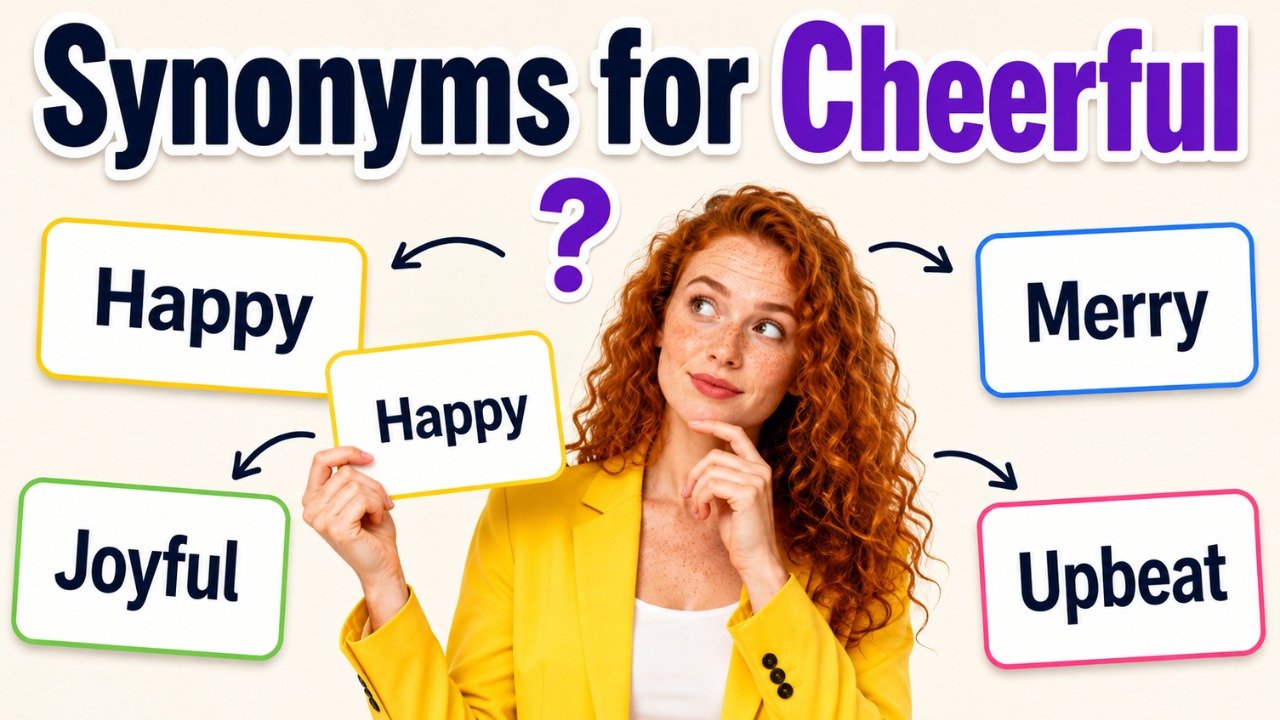
Quick Answer: Common synonyms for cheerful include happy, joyful, merry, upbeat, bright, lively, jolly, sunny, buoyant, and lighthearted. The best synonyms for cheerful depend on context. Use happy for a general positive feeling, joyful for stronger happiness, upbeat for an optimistic attitude, lively for energetic behavior, sunny for a naturally pleasant personality, merry for festive happiness, and lighthearted for a relaxed and carefree mood.
Pronunciation and Word Details
Word: Cheerful.
Pronunciation: /ˈtʃɪr.fəl/
Part of Speech: Adjective.
Meaning: Happy, positive, pleasant, and showing a good mood.
US Pronunciation:
UK Pronunciation:
What Does “Cheerful” Mean?
Cheerful means noticeably happy, positive, and pleasant in mood, appearance, behavior, or atmosphere. It is an adjective used to describe people, voices, expressions, colors, places, attitudes, and situations that create or communicate a sense of happiness.
A cheerful person often appears friendly, optimistic, and in good spirits. A cheerful voice sounds pleasant and positive. A cheerful room may feel bright, colorful, and welcoming.
Example: She gave everyone a cheerful greeting when she entered the office.
The word does not always suggest intense happiness. Someone can be cheerful without being extremely excited. In many sentences, cheerful describes a steady, pleasant form of happiness rather than a powerful emotional reaction.
Example: Despite the rainy morning, he remained cheerful throughout the day.
Meaning, Tone, and Context of “Cheerful”
Cheerful usually has a positive, friendly, and emotionally warm tone. It is common in both everyday conversation and general writing.
Tone: Positive, pleasant, friendly, and optimistic.
Formality: Neutral. It works naturally in casual speech, professional communication, descriptions, stories, essays, and everyday writing.
Emotional Strength: Moderate. Cheerful usually communicates visible happiness without suggesting overwhelming excitement.
Common Use: It often describes a person’s mood, personality, voice, smile, expression, attitude, greeting, room, color scheme, or atmosphere.
Conversational Use: Cheerful sounds natural when describing someone who appears happy and pleasant.
Descriptive Use: Writers often use cheerful for places, sounds, colors, or expressions that create a positive feeling.
Professional Use: Cheerful can describe a positive attitude or manner without sounding overly casual.
Example: Her cheerful manner helped the new employees feel comfortable.
When and How to Use “Cheerful”
For a Happy Mood
Use cheerful when someone appears noticeably happy and in good spirits.
Example: Daniel seemed cheerful after receiving the good news.
For a Positive Personality
Use cheerful when happiness and optimism are regular parts of someone’s personality.
Example: Our neighbor is cheerful and friendly whenever we meet her.
For a Pleasant Voice
Cheerful can describe a voice or tone that sounds warm, positive, and welcoming.
Example: The receptionist answered the phone in a cheerful voice.
For a Bright Appearance
Use cheerful for colors, decorations, rooms, or designs that create a pleasant and uplifting feeling.
Example: The yellow curtains gave the kitchen a cheerful appearance.
For an Optimistic Attitude
Cheerful can describe someone who remains positive despite ordinary difficulties.
Example: He kept a cheerful attitude during the long journey.
For Friendly Communication
Cheerful works well when describing greetings, messages, conversations, or expressions that feel positive and welcoming.
Example: She welcomed the visitors with a cheerful smile.
Best Synonyms for Cheerful
Happy: Feeling or showing pleasure, satisfaction, or contentment.
Example: She looked happy after finishing the project.
Joyful: Showing strong and sincere happiness.
Example: The family shared a joyful moment together.
Upbeat: Positive, hopeful, and optimistic in attitude.
Example: He remained upbeat even when the schedule changed.
Bright: Happy, lively, and full of positive energy.
Example: She greeted us with a bright smile.
Lively: Full of energy, activity, and enthusiasm.
Example: The lively conversation continued throughout dinner.
Jolly: Friendly, happy, and full of good spirits.
Example: The jolly host made every guest feel welcome.
Sunny: Naturally happy, warm, and optimistic.
Example: Her sunny personality made the workplace more pleasant.
Buoyant: Emotionally positive and able to stay optimistic.
Example: His buoyant mood continued despite the minor setback.
Merry: Happy, sociable, and often associated with enjoyable occasions.
Example: The guests were in a merry mood during the gathering.
Lighthearted: Happy, relaxed, and free from serious worry.
Example: Their lighthearted conversation helped everyone relax.
50 Synonyms for Cheerful with Short Meanings
- Happy: Feeling or showing pleasure.
- Joyful: Full of sincere happiness.
- Merry: Happy and socially pleasant.
- Upbeat: Optimistic and positive.
- Bright: Lively and pleasantly happy.
- Lively: Full of positive energy.
- Jolly: Friendly and good spirited.
- Sunny: Warm, happy, and optimistic.
- Buoyant: Positive and emotionally resilient.
- Lighthearted: Relaxed and free from worry.
- Glad: Feeling pleased about something.
- Delighted: Very pleased and happy.
- Pleased: Feeling satisfaction or enjoyment.
- Contented: Peacefully satisfied and happy.
- Carefree: Free from worry or anxiety.
- Optimistic: Expecting positive outcomes.
- Positive: Showing confidence and hope.
- Spirited: Full of enthusiasm and energy.
- Animated: Lively and expressive.
- Vivacious: Attractively energetic and lively.
- Exuberant: Full of enthusiastic happiness.
- Gleeful: Showing excited happiness.
- Jovial: Friendly, sociable, and cheerful.
- Genial: Warm, friendly, and pleasant.
- Cheery: Noticeably happy and positive.
- Radiant: Glowing with visible happiness.
- Smiling: Showing happiness through a smile.
- Beaming: Smiling with obvious pleasure.
- Blissful: Extremely happy and peaceful.
- Elated: Extremely pleased and excited.
- Jubilant: Showing great joy after success.
- Festive: Joyful and suited to a celebration.
- Chipper: Lively, cheerful, and energetic.
- Perky: Cheerful, alert, and energetic.
- Breezy: Relaxed, confident, and cheerful.
- Enthusiastic: Showing eager positive interest.
- Energetic: Full of active energy.
- Hopeful: Feeling positive about the future.
- Warm: Friendly and emotionally welcoming.
- Pleasant: Enjoyable, agreeable, and friendly.
- Amiable: Friendly and good natured.
- Cordial: Warm and friendly in manner.
- Effervescent: Lively, enthusiastic, and sparkling in personality.
- Sparkling: Full of lively charm and energy.
- Good humored: Pleasant and easily amused.
- High spirited: Energetic, lively, and enthusiastic.
- Hearty: Warm, enthusiastic, and sincere.
- Relaxed: Calm and free from tension.
- Playful: Light, lively, and fun in manner.
- Good natured: Naturally kind, pleasant, and agreeable.
Read Also:
Synonyms for Stark

Synonyms for Cheerful by Context
When Cheerful Means Happy
When cheerful simply means feeling good or showing happiness, happy, glad, pleased, joyful, and contented are useful alternatives.
Happy: The most general replacement for cheerful.
Example: She appeared happy after hearing the announcement.
Glad: Often describes happiness caused by a particular event.
Example: I am glad you were able to join us.
Pleased: Suggests satisfaction rather than energetic happiness.
Example: He was pleased with the final result.
Joyful: Communicates stronger emotional happiness.
Example: Their reunion was a joyful occasion.
When Cheerful Means Optimistic
When cheerful describes a positive outlook, upbeat, optimistic, hopeful, buoyant, and positive are better choices.
Upbeat: Suggests a consistently positive attitude.
Example: She remained upbeat during the difficult week.
Optimistic: Focuses on expecting good future outcomes.
Example: The team remained optimistic about its progress.
Hopeful: Expresses confidence that something good may happen.
Example: He sounded hopeful about the interview.
Buoyant: Suggests emotional resilience and continuing good spirits.
Example: Her buoyant attitude encouraged the rest of the group.
When Cheerful Means Energetic
When cheerful includes visible energy or enthusiasm, lively, spirited, animated, vivacious, chipper, and perky are strong alternatives.
Lively: Best for active energy.
Example: The room became lively once the guests arrived.
Spirited: Suggests energetic enthusiasm and confidence.
Example: They had a spirited and enjoyable discussion.
Animated: Works especially well for expressive speech or behavior.
Example: He became animated while describing the trip.
Vivacious: Often describes an energetic and socially engaging personality.
Example: Her vivacious personality immediately attracted attention.
When Cheerful Means Friendly and Pleasant
When cheerful describes a person’s warm manner, genial, amiable, jovial, warm, cordial, and good natured can work well.
Genial: Suggests a warm and friendly personality.
Example: The host maintained a genial manner throughout the evening.
Amiable: Describes someone who is pleasant and easy to like.
Example: She was an amiable colleague who worked well with everyone.
Jovial: Suggests sociable happiness and friendliness.
Example: His jovial personality made the gathering enjoyable.
When Cheerful Describes an Atmosphere
For a room, environment, event, or visual appearance, bright, lively, pleasant, festive, and sunny may be more natural.
Bright: Suggests an uplifting visual quality.
Example: Light walls gave the room a bright and cheerful appearance.
Festive: Best when happiness is connected with celebration.
Example: Colorful decorations created a festive atmosphere.
Lively: Works for busy and energetic environments.
Example: The cafe had a lively atmosphere during lunch.
Another Word for Cheerful
The best general replacement for cheerful is happy because it works naturally in most everyday contexts. However, the best alternative depends on what kind of happiness you want to describe.
Use joyful for stronger emotion, upbeat for optimism, lively for energy, and sunny for a naturally positive personality.
Original: She was cheerful during the meeting.
Better Option: She was upbeat during the meeting.
Original: He gave us a cheerful smile.
Better Option: He gave us a bright smile.
Original: The children were cheerful after the game.
Better Option: The children were joyful after the game.
Original: She has always had a cheerful personality.
Better Option: She has always had a sunny personality.
When Not to Use “Cheerful”
Cheerful is useful, but it may be too general when a sentence requires a more specific emotion.
If someone is extremely happy about an important achievement, elated or jubilant may communicate the intensity better.
Weak: She was cheerful after winning the major competition.
Better: She was jubilant after winning the major competition.
Cheerful can also sound vague when you want to emphasize optimism rather than visible happiness.
Weak: He stayed cheerful about the future.
Better: He stayed optimistic about the future.
When describing energetic movement or conversation, lively can be more precise.
Weak: They had a cheerful discussion that continued for hours.
Better: They had a lively discussion that continued for hours.
For formal writing about satisfaction, pleased or contented may sometimes be more suitable.
Weak: The committee was cheerful with the results.
Better: The committee was pleased with the results.
Words Commonly Confused With Cheerful
Cheerful vs Happy: Happy is a broad term for experiencing pleasure or satisfaction. Cheerful usually suggests that happiness is visible through someone’s behavior, voice, expression, or attitude.
Cheerful vs Joyful: Cheerful suggests pleasant everyday happiness, while joyful usually expresses stronger and deeper happiness.
Cheerful vs Lively: Cheerful focuses on positive mood. Lively focuses more on energy, movement, or activity.
Cheerful vs Optimistic: Cheerful describes a happy mood or manner. Optimistic describes an expectation that future events will turn out well.
Cheerful vs Jovial: Cheerful can describe many types of positive behavior. Jovial particularly suggests friendly, sociable, and good humored behavior.
Cheerful vs Carefree: Cheerful means visibly happy or positive. Carefree emphasizes freedom from worry or responsibility.
Cheerful vs Bright: Cheerful describes mood directly, while bright can describe a happy expression, energetic personality, or uplifting appearance.
Which Synonym Should You Choose?
Choose happy when you need a simple and widely understood word for a positive emotional state.
Choose joyful when the happiness is strong, sincere, and emotionally meaningful.
Choose upbeat when describing optimism, positive communication, or a constructive attitude.
Choose lively when energy and activity are more important than emotion.
Choose bright when describing a smile, expression, voice, room, or pleasant appearance.
Choose sunny when describing a naturally positive personality or disposition.
Choose jovial when describing someone who is sociable, friendly, and visibly good humored.
Choose pleased in professional writing when you mean satisfied with a result, decision, or outcome.
Choose optimistic in essays, reports, or formal writing when the focus is confidence about the future.
Choose lighthearted in conversation or descriptive writing when the mood is relaxed, easy, and free from serious concern.
Real Life Examples of “Cheerful” in Sentences
Original: She remained cheerful throughout the long trip.
Better Option: She remained upbeat throughout the long trip.
Original: His cheerful smile welcomed everyone into the room.
Better Option: His bright smile welcomed everyone into the room.
Original: The children sounded cheerful while playing outside.
Better Option: The children sounded joyful while playing outside.
Original: She has a cheerful personality that makes people comfortable.
Better Option: She has a sunny personality that makes people comfortable.
Original: He gave a cheerful response to the unexpected change.
Better Option: He gave a positive response to the unexpected change.
Original: The cheerful conversation helped everyone relax.
Better Option: The lighthearted conversation helped everyone relax.
Original: The room looked cheerful after the renovation.
Better Option: The room looked bright after the renovation.
Original: Our teacher was cheerful and energetic this morning.
Better Option: Our teacher was lively and energetic this morning.
Original: She seemed cheerful after receiving the results.
Better Option: She seemed pleased after receiving the results.
Original: The guests were cheerful throughout the celebration.
Better Option: The guests were merry throughout the celebration.
Synonym Groups and Usage Differences
General Happiness Group
Happy, glad, pleased, contented, and cheery describe general positive feelings.
Happy is the broadest choice, while pleased usually refers to satisfaction with a particular result. Contented suggests peaceful satisfaction.
Example: She felt contented after completing everything she had planned.
Strong Joy Group
Joyful, delighted, elated, jubilant, gleeful, and blissful express stronger levels of happiness.
Elated and jubilant are especially useful for major achievements or exciting news.
Example: The players were jubilant after their victory.
Optimism Group
Upbeat, optimistic, hopeful, buoyant, and positive focus on attitude and expectations.
These words are useful when a person remains confident or hopeful even when circumstances are uncertain.
Example: She remained optimistic despite the delay.
Energy Group
Lively, spirited, animated, vivacious, chipper, perky, and energetic combine positivity with visible energy.
These alternatives are useful for describing conversation, personality, behavior, or social activity.
Example: His animated explanation kept everyone interested.
Friendly Personality Group
Jovial, genial, amiable, warm, cordial, and good natured describe pleasant social behavior.
These words emphasize friendliness as much as happiness.
Example: The genial manager quickly made the visitors feel welcome.
Relaxed Happiness Group
Lighthearted, carefree, breezy, relaxed, and playful suggest happiness without stress or seriousness.
Example: Their lighthearted conversation made the afternoon enjoyable.
Visible Happiness Group
Bright, radiant, smiling, and beaming describe happiness that can be seen in a person’s face or appearance.
Example: She was beaming after hearing the announcement.
Antonyms of Cheerful
The opposite of cheerful depends on whether you are describing mood, personality, expression, or atmosphere.
Sad: Feeling unhappy or sorrowful.
Gloomy: Dark, unhappy, or lacking optimism.
Miserable: Extremely unhappy or uncomfortable.
Somber: Serious, subdued, and lacking cheerfulness.
Melancholy: Quietly sad or thoughtful.
Unhappy: Not feeling pleasure or satisfaction.
Depressed: Very low in mood or spirits.
Morose: Gloomy, unfriendly, and withdrawn.
Pessimistic: Expecting negative outcomes.
Dreary: Dull, depressing, or lacking brightness.
Sullen: Quietly angry, unhappy, or unfriendly.
Downcast: Appearing sad or discouraged.
Comparison: Cheerful vs Related Words
Cheerful vs Happy
Cheerful usually describes visible or noticeable happiness, while happy describes the emotional state more generally.
Example With Cheerful: She remained cheerful while helping the customers.
Example With Happy: She was happy with the decision.
Cheerful vs Joyful
Cheerful expresses moderate, pleasant happiness. Joyful usually describes stronger emotional happiness.
Example With Cheerful: He gave us a cheerful greeting.
Example With Joyful: Their reunion was deeply joyful.
Cheerful vs Upbeat
Cheerful focuses on mood and behavior. Upbeat focuses more strongly on optimism and positive attitude.
Example With Cheerful: She sounded cheerful on the phone.
Example With Upbeat: She stayed upbeat despite the disappointing news.
Cheerful vs Lively
Cheerful refers primarily to happiness. Lively emphasizes energy, activity, and enthusiasm.
Example With Cheerful: The assistant greeted us in a cheerful manner.
Example With Lively: The group had a lively conversation.
Cheerful vs Sunny
Cheerful can describe a temporary mood or general behavior. Sunny often suggests a naturally warm and optimistic personality.
Example With Cheerful: He seemed cheerful this morning.
Example With Sunny: Her sunny personality made her easy to approach.
Cheerful vs Jovial
Cheerful is a general word for visible happiness. Jovial suggests friendly, sociable, and often enthusiastic good spirits.
Example With Cheerful: The cheerful employee welcomed the visitors.
Example With Jovial: The jovial host entertained everyone with stories.
Cheerful vs Lighthearted
Cheerful means happy and positive. Lighthearted adds the idea of being relaxed and free from seriousness or worry.
Example With Cheerful: She gave a cheerful reply.
Example With Lighthearted: They enjoyed a lighthearted conversation over lunch.
Common Phrases and Expressions With Cheerful
Cheerful Mood: A noticeably happy and positive emotional state.
Cheerful Smile: A smile that expresses friendliness and happiness.
Cheerful Voice: A voice that sounds positive, pleasant, and welcoming.
Cheerful Personality: A naturally happy and optimistic character.
Cheerful Attitude: A positive and pleasant way of approaching situations.
Cheerful Greeting: A friendly and happy way of welcoming someone.
Cheerful Expression: A facial appearance that communicates happiness.
Cheerful Atmosphere: An environment that feels pleasant, positive, and uplifting.
Cheerful Color: A bright or pleasant color that creates an uplifting impression.
Cheerful Disposition: A naturally positive and good natured temperament.
Common Mistakes to Avoid
One common mistake is using cheerful as a replacement for every form of happiness. Different synonyms communicate different emotional strengths and situations.
Repetition: Avoid using cheerful repeatedly within the same paragraph when happy, upbeat, bright, lively, or positive would communicate the idea more naturally.
Wrong Intensity: Do not use cheerful when the emotion is extremely strong if joyful, elated, or jubilant would be more precise.
Example: A person who has just achieved a lifelong goal may be elated rather than simply cheerful.
Confusing Mood With Optimism: Cheerful describes present mood or manner, while optimistic focuses on expectations about the future.
Unnatural Professional Usage: In formal situations, pleased may sound more natural than cheerful when discussing satisfaction with results.
Weak: The manager was cheerful with the report.
Better: The manager was pleased with the report.
Confusing Energy With Happiness: A lively person may be energetic without necessarily feeling cheerful. Choose the word that matches the intended meaning.
Vague Description: When possible, select a synonym that explains why someone seems cheerful. Bright may describe an expression, upbeat may describe an attitude, and jovial may describe social behavior.
Conclusion
The best synonyms for cheerful depend on the kind of happiness, energy, or positivity you want to express. Happy is the safest general alternative, while joyful suggests stronger emotion. Upbeat and optimistic emphasize a positive attitude, lively and spirited suggest energy, sunny describes a naturally positive personality, and lighthearted communicates relaxed happiness. Choosing a precise synonym makes sentences clearer and helps readers understand whether you mean happiness, optimism, friendliness, enthusiasm, or a pleasant atmosphere.
FAQs About Synonyms for Cheerful
What Is the Best Synonym for Cheerful?
The best general synonym is happy. For more specific contexts, use upbeat for optimism, lively for energy, joyful for strong happiness, and sunny for a positive personality.
What Is a Stronger Word Than Cheerful?
Joyful, elated, jubilant, and exuberant are stronger than cheerful because they communicate greater emotional intensity.
What Is Another Word for a Cheerful Person?
A cheerful person can be described as happy, sunny, jovial, upbeat, genial, amiable, or good natured, depending on the person’s behavior and personality.
Is Upbeat a Synonym for Cheerful?
Yes. Upbeat is a useful synonym when cheerful refers to an optimistic, confident, or positive attitude.
What Is the Difference Between Cheerful and Joyful?
Cheerful describes pleasant and visible everyday happiness. Joyful usually expresses deeper or stronger happiness connected with an important experience.
Can Cheerful Describe a Place?
Yes. Cheerful can describe a room, home, office, atmosphere, or other environment that feels bright, pleasant, colorful, and uplifting.
What Is the Opposite of Cheerful?
Common opposites include sad, gloomy, miserable, somber, morose, pessimistic, and downcast. The best antonym depends on the context.
