
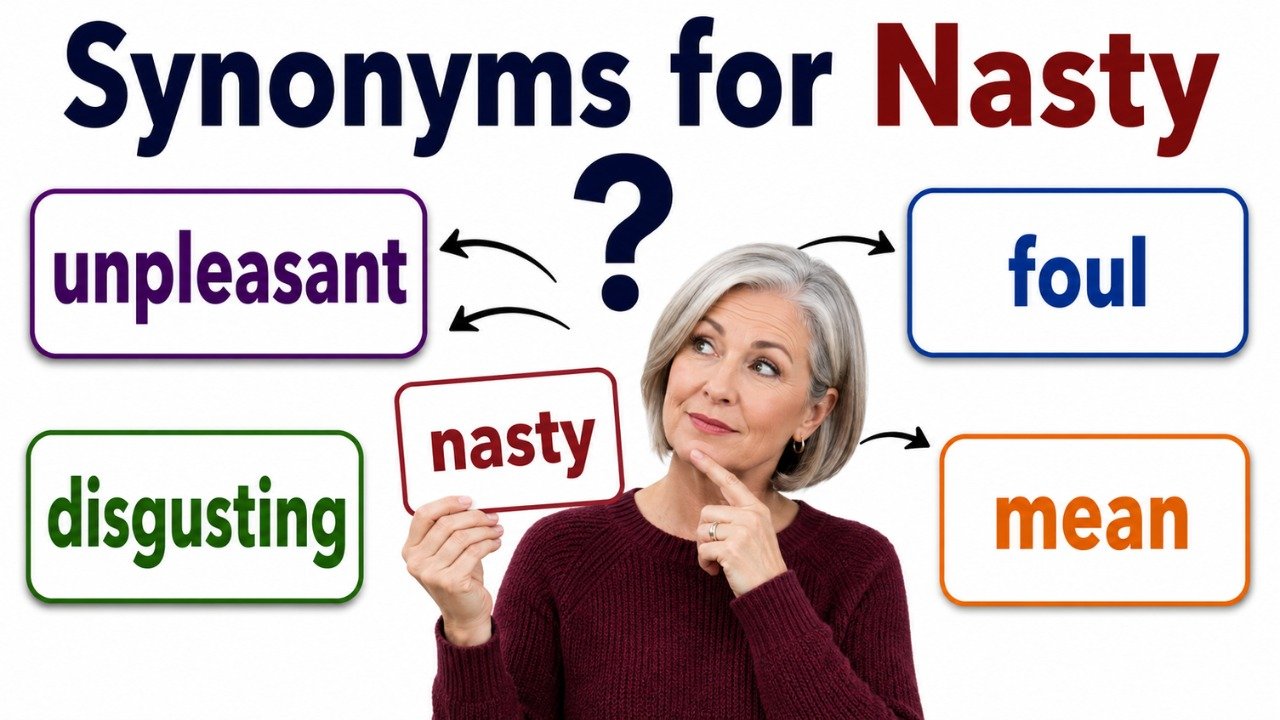
Quick Answer: The best synonyms for nasty include unpleasant, horrible, disgusting, awful, foul, cruel, mean, vicious, offensive, and vile. The right replacement depends on context. Use unpleasant for a generally bad experience, disgusting for something that causes strong revulsion, cruel or mean for hurtful behavior, vicious for aggressive actions, foul for offensive smells or conditions, and vile for something extremely unpleasant or morally offensive.
Pronunciation and Word Details
Word: Nasty.
Pronunciation: /ˈnæsti/
Part of Speech: Adjective.
Meaning: Very unpleasant, offensive, disgusting, unkind, or harmful.
US Pronunciation:
UK Pronunciation:
What Does “Nasty” Mean?
Nasty means very unpleasant, offensive, disgusting, cruel, or harmful.
It is an adjective with several common uses. It can describe a bad smell, unpleasant weather, rude behavior, a severe injury, an offensive comment, or a difficult situation.
Unpleasant Experience: The journey became nasty when the weather changed.
Unkind Behavior: She made a nasty remark during the discussion.
Disgusting Condition: There was a nasty smell coming from the kitchen.
Serious Situation: He suffered a nasty injury during the match.
Aggressive Behavior: The argument became nasty very quickly.
Because nasty has several meanings, choosing a more specific synonym can make writing clearer and more precise.
Meaning, Tone, and Context of “Nasty”
Nasty has a strongly negative tone. It is common in everyday conversation, informal writing, descriptions, storytelling, and emotional language.
Casual Tone: Nasty is common in ordinary speech.
Example: That was a nasty surprise.
Negative Tone: The word almost always communicates dislike, discomfort, disgust, or criticism.
Example: He made a nasty comment about her work.
Emotional Tone: Nasty can express anger, disgust, fear, or strong disapproval.
Example: They had a nasty argument.
Descriptive Context: It can describe smells, tastes, weather, injuries, conditions, and experiences.
Example: A nasty odor filled the room.
Behavioral Context: It can describe someone who is cruel, rude, spiteful, or deliberately hurtful.
Example: She became nasty when she was criticized.
Formal Context: Nasty can sound too informal in academic or professional writing. More precise alternatives such as unpleasant, offensive, severe, malicious, or harmful are often better.
When and How to Use “Nasty”
For Unpleasant Experiences
Use: Choose nasty when describing something generally uncomfortable, difficult, or disagreeable.
Example: We had a nasty experience during the journey.
For Cruel Behavior
Use: Nasty can describe someone who behaves in an unkind or hurtful way.
Example: He made a nasty remark about his colleague.
For Disgusting Things
Use: Use nasty when something causes disgust because of its appearance, smell, taste, or condition.
Example: There was a nasty smell coming from the container.
For Serious Injuries
Use: Nasty can informally describe an injury that looks painful or severe.
Example: She suffered a nasty cut on her hand.
For Arguments
Use: Nasty can describe a disagreement that becomes hostile or personal.
Example: Their discussion turned into a nasty argument.
For Weather
Use: Nasty can describe severe, uncomfortable, or unpleasant weather.
Example: Nasty weather made driving difficult.
For Harmful Situations
Use: Nasty can describe something dangerous or troublesome.
Example: The problem could become nasty if it is ignored.
Best Synonyms for Nasty
Unpleasant: Not enjoyable, comfortable, or agreeable.
Example: The meeting became unpleasant after several disagreements.
Horrible: Extremely bad, unpleasant, or distressing.
Example: They had a horrible experience during the storm.
Disgusting: Causing strong dislike or physical revulsion.
Example: The spoiled food had a disgusting smell.
Awful: Extremely bad or unpleasant.
Example: The weather was awful all afternoon.
Foul: Extremely unpleasant, dirty, offensive, or bad smelling.
Example: A foul odor came from the drain.
Cruel: Deliberately causing pain or suffering.
Example: His cruel remarks upset everyone.
Mean: Unkind or deliberately hurtful.
Example: That was a mean thing to say.
Vicious: Extremely aggressive, violent, or malicious.
Example: The discussion turned into a vicious argument.
Offensive: Causing anger, disgust, or insult.
Example: Several readers found the comment offensive.
Vile: Extremely unpleasant, disgusting, or morally bad.
Example: The room was filled with a vile smell.
50 Synonyms for Nasty with Short Meanings
- Unpleasant: Not enjoyable or agreeable.
- Horrible: Extremely bad or unpleasant.
- Disgusting: Causing strong revulsion.
- Awful: Very bad or disagreeable.
- Foul: Offensive, dirty, or bad smelling.
- Cruel: Deliberately causing pain or suffering.
- Mean: Unkind or hurtful.
- Vicious: Aggressive, violent, or malicious.
- Offensive: Likely to upset or insult.
- Vile: Extremely unpleasant or morally bad.
- Revolting: Extremely disgusting.
- Repulsive: Causing intense dislike.
- Repugnant: Deeply offensive or unacceptable.
- Loathsome: Causing strong hatred or disgust.
- Detestable: Deserving intense dislike.
- Odious: Extremely unpleasant or hateful.
- Abhorrent: Strongly offensive or unacceptable.
- Gross: Very unpleasant or disgusting.
- Sickening: Causing disgust or emotional distress.
- Nauseating: Causing a feeling of sickness.
- Distasteful: Unpleasant or offensive.
- Disagreeable: Not pleasant or enjoyable.
- Obnoxious: Extremely irritating or offensive.
- Unsavory: Unpleasant or morally questionable.
- Filthy: Extremely dirty or offensive.
- Dirty: Unclean or unpleasant.
- Rancid: Having a stale, unpleasant smell or taste.
- Putrid: Decaying and extremely foul smelling.
- Rank: Having a strong unpleasant smell.
- Noxious: Harmful or extremely unpleasant.
- Harsh: Severe, rough, or unpleasant.
- Bitter: Harsh or resentful in attitude.
- Spiteful: Intentionally wanting to hurt someone.
- Malicious: Intending to cause harm.
- Malevolent: Wishing harm to others.
- Hostile: Unfriendly or aggressive.
- Aggressive: Ready to attack or confront.
- Brutal: Extremely cruel or harsh.
- Savage: Fierce, violent, or cruel.
- Ruthless: Showing no pity or compassion.
- Heartless: Lacking sympathy or kindness.
- Unkind: Not friendly or considerate.
- Hateful: Extremely unpleasant or full of hatred.
- Wicked: Morally bad or harmful.
- Sinister: Suggesting danger or evil.
- Toxic: Harmful or deeply unpleasant.
- Dreadful: Extremely bad or unpleasant.
- Terrible: Very bad or distressing.
- Severe: Serious, intense, or harsh.
- Hostile: Aggressively unfriendly or antagonistic.
Read Also:
Synonyms for Fish

Synonyms for Nasty by Context
When Nasty Means Unpleasant
When nasty refers to an uncomfortable or generally bad experience, useful synonyms include unpleasant, disagreeable, awful, horrible, dreadful, and terrible.
Unpleasant: Best for neutral or professional writing.
Example: The conversation became unpleasant.
Disagreeable: Useful for something difficult to enjoy or tolerate.
Example: The weather remained disagreeable throughout the afternoon.
Awful: Strong and conversational.
Example: We had an awful journey home.
When Nasty Means Disgusting
When nasty describes something physically repulsive, use disgusting, revolting, repulsive, foul, vile, sickening, or nauseating.
Disgusting: A strong general word for something that causes revulsion.
Example: The spoiled food smelled disgusting.
Revolting: Stronger and more emotional than unpleasant.
Example: The condition of the room was revolting.
Foul: Especially useful for odors, tastes, language, and dirty conditions.
Example: A foul smell came from the basement.
When Nasty Means Cruel
When nasty describes a person, comment, or action that intentionally hurts someone, use cruel, mean, unkind, spiteful, malicious, or heartless.
Cruel: Best when someone deliberately causes emotional or physical pain.
Example: His cruel words upset her.
Mean: A natural conversational alternative.
Example: That was a mean comment.
Spiteful: Suggests an intention to hurt someone because of anger or resentment.
Example: She made a spiteful remark.
When Nasty Means Aggressive
When nasty describes conflict or hostile behavior, use vicious, hostile, aggressive, brutal, or savage.
Vicious: Suggests extreme aggression or harmful intent.
Example: They became involved in a vicious dispute.
Hostile: Best for openly unfriendly behavior.
Example: The conversation became hostile.
Aggressive: Emphasizes forceful or confrontational behavior.
Example: His aggressive response surprised everyone.
When Nasty Means Severe
Nasty can informally describe something serious or painful, such as an injury, accident, infection, or problem.
Useful replacements include severe, serious, painful, dangerous, and harsh.
Severe: More precise in formal descriptions.
Example: She suffered a severe injury.
Harsh: Useful for difficult conditions or treatment.
Example: They faced harsh conditions during the journey.
Another Word for Nasty
The best general replacement for nasty is unpleasant because it works naturally in many situations and has a more neutral tone.
However, the best alternative depends on the intended meaning. Use disgusting for physical revulsion, cruel for hurtful behavior, vicious for aggression, foul for smells or offensive conditions, and severe for serious injuries or problems.
Original: We had a nasty experience at the hotel.
Better Option: We had an unpleasant experience at the hotel.
Original: There was a nasty smell in the room.
Better Option: There was a foul smell in the room.
Original: She made a nasty comment.
Better Option: She made a cruel comment.
Original: They had a nasty argument.
Better Option: They had a vicious argument.
When Not to Use “Nasty”
Nasty is useful in casual communication, but it can be vague because it has several meanings.
In Formal Writing
Use a more precise word in reports, essays, professional communication, or academic writing.
Weak: The project faced a nasty problem.
Better: The project faced a serious problem.
When Describing an Injury
Nasty is informal. Severe or serious may be clearer.
Weak: He suffered a nasty injury.
Better: He suffered a severe injury.
When Describing Offensive Behavior
Words such as cruel, malicious, insulting, or hostile may communicate the exact meaning better.
Weak: She made a nasty statement.
Better: She made an offensive statement.
When Describing Smells
Foul, rancid, rank, or putrid may give readers a clearer picture.
Weak: The food had a nasty smell.
Better: The food had a rancid smell.
When Repetition Makes Writing Weak
Repeated use of nasty can make descriptions vague.
Weak: It was a nasty day with nasty weather and a nasty argument.
Better: It was a difficult day with dreadful weather and a bitter argument.
Words Commonly Confused With Nasty
Nasty vs Unpleasant: Nasty is stronger and more informal. Unpleasant is more neutral and works better in professional contexts.
Nasty vs Disgusting: Nasty has several meanings, while disgusting specifically communicates strong revulsion.
Nasty vs Cruel: Nasty can describe general unpleasantness. Cruel specifically describes behavior that causes suffering or pain.
Nasty vs Mean: Mean usually describes unkind behavior, while nasty can describe behavior, smells, conditions, injuries, or experiences.
Nasty vs Vicious: Vicious suggests stronger aggression, violence, or deliberate harm.
Nasty vs Foul: Foul often describes smells, language, dirty conditions, or something highly offensive.
Nasty vs Severe: Nasty is an informal way to describe a serious injury or problem. Severe is more precise and formal.
Which Synonym Should You Choose?
Choose unpleasant for general negative experiences and professional writing.
Choose horrible when something is extremely bad or distressing.
Choose disgusting when something causes strong physical or emotional revulsion.
Choose awful for casual descriptions of very bad experiences.
Choose foul for unpleasant smells, tastes, language, or dirty conditions.
Choose cruel when someone deliberately causes pain or emotional harm.
Choose mean for everyday descriptions of unkind behavior.
Choose vicious when behavior, conflict, or criticism is aggressively harmful.
Choose offensive for comments, language, behavior, or material that causes insult or disgust.
Choose vile when something is extremely disgusting or morally offensive.
Choose severe for injuries, illnesses, weather, or serious problems in formal contexts.
Choose malicious when harmful behavior is intentional.
Choose spiteful when someone acts from resentment or a desire to hurt another person.
Choose repulsive or revolting when strong disgust is the main meaning.
Real Life Examples of “Nasty” in Sentences
Original: The room had a nasty smell.
Better Option: The room had a foul smell.
Original: She made a nasty remark about his appearance.
Better Option: She made a cruel remark about his appearance.
Original: The weather became nasty during the afternoon.
Better Option: The weather became dreadful during the afternoon.
Original: They had a nasty argument over money.
Better Option: They had a vicious argument over money.
Original: He suffered a nasty injury during training.
Better Option: He suffered a severe injury during training.
Original: The food left a nasty taste in my mouth.
Better Option: The food left a disgusting taste in my mouth.
Original: Her manager became nasty when questioned.
Better Option: Her manager became hostile when questioned.
Original: That was a nasty thing to say.
Better Option: That was a mean thing to say.
Original: We encountered a nasty problem near the end of the project.
Better Option: We encountered a serious problem near the end of the project.
Original: The container released a nasty odor when opened.
Better Option: The container released a putrid odor when opened.
Synonym Groups and Usage Differences
General Unpleasantness Group
Unpleasant, disagreeable, awful, horrible, dreadful, and terrible describe negative experiences or conditions.
Unpleasant is the most neutral. Awful and horrible are stronger and more emotional.
Example: The journey became unpleasant after several delays.
Disgust Group
Disgusting, revolting, repulsive, vile, loathsome, foul, and sickening describe something that produces strong dislike or revulsion.
Example: The rotten food produced a revolting smell.
Cruelty Group
Cruel, mean, unkind, spiteful, heartless, and ruthless focus on behavior toward other people.
Example: His spiteful comments were intended to embarrass her.
Harmful Intent Group
Malicious, malevolent, vicious, wicked, and sinister can suggest deliberate harm or dangerous intentions.
Example: The malicious rumor was designed to damage her reputation.
Aggression Group
Hostile, aggressive, vicious, brutal, and savage describe threatening or confrontational behavior.
Example: The discussion became hostile after the accusation.
Offensive Condition Group
Foul, filthy, dirty, rancid, rank, putrid, and noxious describe unpleasant physical conditions, smells, substances, or environments.
Example: A rancid odor came from the old container.
Antonyms of Nasty
The opposite of nasty changes according to its meaning.
Pleasant: Enjoyable or agreeable.
Nice: Kind, pleasant, or enjoyable.
Agreeable: Pleasant and easy to accept.
Delightful: Highly enjoyable or pleasing.
Enjoyable: Giving pleasure or satisfaction.
Kind: Caring and considerate toward others.
Friendly: Pleasant and welcoming toward people.
Compassionate: Showing concern for suffering.
Gentle: Mild, kind, or careful.
Polite: Showing good manners and respect.
Clean: Free from dirt or unpleasant substances.
Fresh: Clean, pleasant, or recently produced.
Appealing: Attractive or enjoyable.
Attractive: Pleasing in appearance or character.
Harmless: Not likely to cause injury or damage.
Comparison: Nasty vs Related Words
Nasty vs Unpleasant
Nasty is stronger, more emotional, and more informal. Unpleasant is neutral and suitable for formal contexts.
Example With Nasty: We had a nasty experience during the journey.
Example With Unpleasant: We had an unpleasant experience during the journey.
Nasty vs Disgusting
Nasty can mean several things. Disgusting specifically describes something that causes strong revulsion.
Example With Nasty: The sink had a nasty smell.
Example With Disgusting: The spoiled meat had a disgusting smell.
Nasty vs Cruel
Nasty can describe generally unkind behavior. Cruel specifically emphasizes causing pain or suffering.
Example With Nasty: He made a nasty comment.
Example With Cruel: He made a cruel comment about her illness.
Nasty vs Mean
Mean is a common casual word for unkind behavior. Nasty can be stronger and can describe many things besides behavior.
Example With Nasty: She became nasty during the disagreement.
Example With Mean: She was mean to her younger brother.
Nasty vs Vicious
Vicious is stronger than nasty and often suggests deliberate aggression or serious harm.
Example With Nasty: They had a nasty argument.
Example With Vicious: They became involved in a vicious argument.
Nasty vs Foul
Nasty is broad. Foul is especially useful for offensive smells, language, tastes, or dirty conditions.
Example With Nasty: Something smelled nasty in the refrigerator.
Example With Foul: A foul odor came from the refrigerator.
Nasty vs Severe
Nasty can informally describe something serious. Severe is better when accuracy and formality matter.
Example With Nasty: She suffered a nasty cut.
Example With Severe: She suffered a severe cut that required immediate treatment.
Common Phrases and Expressions With Nasty
Nasty Surprise: An unexpected and unpleasant event.
Example: The additional cost was a nasty surprise.
Nasty Smell: A very unpleasant odor.
Example: A nasty smell came from the cupboard.
Nasty Comment: An unkind or offensive remark.
Example: He apologized for his nasty comment.
Nasty Argument: A hostile or aggressive disagreement.
Example: They had a nasty argument about the decision.
Nasty Injury: A serious or painful injury.
Example: He suffered a nasty injury during practice.
Nasty Taste: A very unpleasant flavor.
Example: The medicine left a nasty taste.
Nasty Habit: An unpleasant or undesirable habit.
Example: She wanted to stop the nasty habit.
Nasty Temper: A tendency to become angry or aggressive.
Example: He was known for his nasty temper.
Nasty Weather: Severe or unpleasant weather.
Example: The nasty weather kept everyone indoors.
Nasty Piece of Work: An informal expression for a very unpleasant or cruel person.
Example: The character is portrayed as a nasty piece of work.
Common Mistakes to Avoid
Using Nasty Too Broadly
Nasty has many meanings, so it can make writing vague.
Weak: The situation was nasty.
Better: The situation was dangerous and unpleasant.
Using Nasty Repeatedly
Repeating the word can make descriptions monotonous.
Weak: She made a nasty comment during a nasty argument on a nasty day.
Better: She made a cruel comment during a vicious argument on a dreadful day.
Choosing Disgusting for Cruel Behavior
Disgusting communicates revulsion rather than simply unkind behavior.
Weak: He was disgusting to his younger brother.
Better: He was cruel to his younger brother.
Choosing Cruel for a Bad Smell
Cruel describes behavior, not odors.
Incorrect: The kitchen had a cruel smell.
Correct: The kitchen had a foul smell.
Using Nasty in Formal Reports
Nasty can sound informal when describing serious matters.
Weak: The company encountered a nasty financial problem.
Better: The company encountered a serious financial problem.
Confusing Severity With Disgust
A nasty injury may mean severe, while a nasty smell may mean foul or disgusting. Always identify the intended meaning before replacing the word.
Ignoring Tone
Vile, loathsome, and abhorrent are much stronger than unpleasant. Choose them only when the context supports intense disgust or moral condemnation.
Conclusion
The best synonyms for nasty include unpleasant, horrible, disgusting, awful, foul, cruel, mean, vicious, offensive, and vile. The most accurate choice depends on what nasty describes. Use unpleasant for general discomfort, disgusting or revolting for strong revulsion, cruel or mean for hurtful behavior, foul for unpleasant smells, and severe for serious injuries or problems. Understanding these differences helps you choose synonyms for nasty that make your writing clearer, stronger, and more precise.
FAQs About Synonyms for Nasty
What Is the Best Synonym for Nasty?
The best general synonym is unpleasant. However, disgusting, cruel, foul, vicious, or severe may be better depending on the meaning.
What Is a Stronger Word Than Nasty?
Vile, revolting, loathsome, vicious, or abhorrent can be stronger than nasty in appropriate contexts.
What Is a Polite Synonym for Nasty?
Unpleasant and disagreeable are softer and more polite alternatives, especially in professional writing.
What Is a Synonym for Nasty Behavior?
Cruel, mean, spiteful, malicious, hostile, and vicious are useful alternatives for nasty behavior.
What Is a Synonym for a Nasty Smell?
Foul, rancid, rank, putrid, disgusting, and noxious can describe a nasty smell.
What Is the Difference Between Nasty and Disgusting?
Nasty has several meanings, including unpleasant, cruel, severe, and disgusting. Disgusting specifically refers to something that causes strong revulsion.
Is Nasty Formal or Informal?
Nasty is common in everyday and informal English. In formal writing, more precise words such as unpleasant, offensive, severe, malicious, or harmful are often better.
