
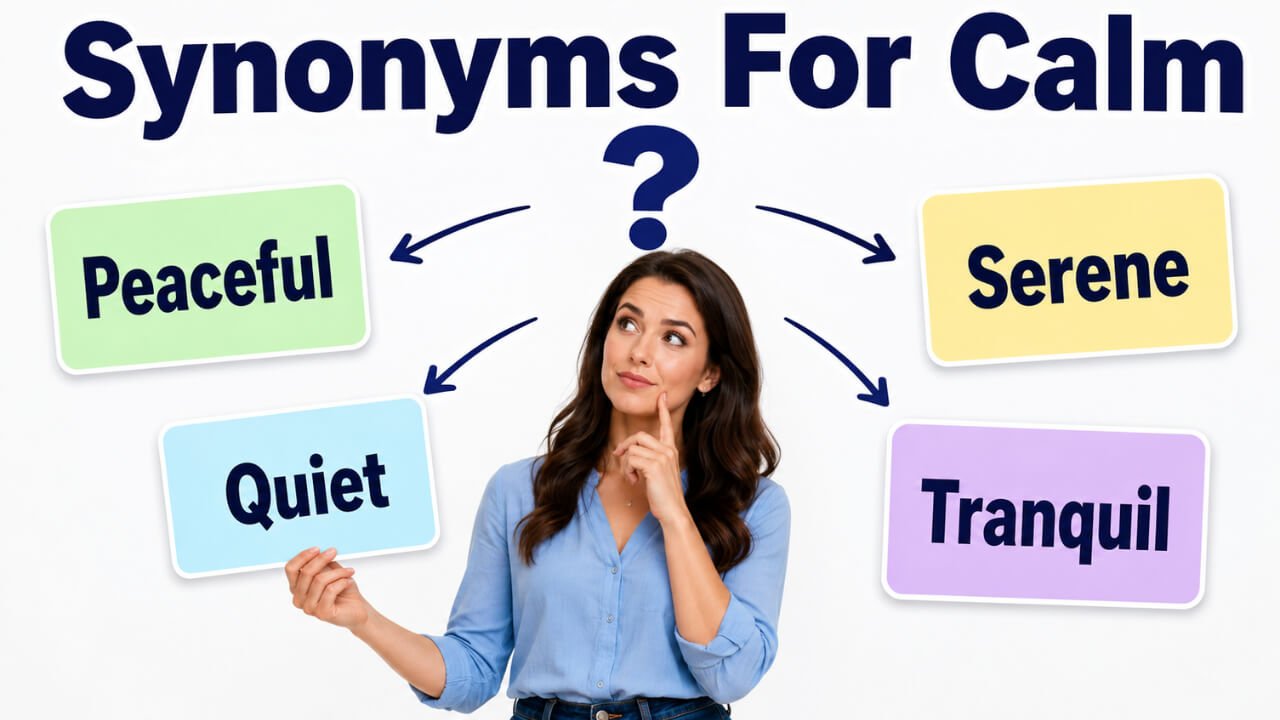
Quick Answer: The best synonyms for calm include peaceful, relaxed, composed, tranquil, serene, quiet, still, collected, untroubled, and soothing. Use peaceful for a gentle atmosphere, relaxed for a person without stress, composed for emotional control, tranquil for a quiet place, serene for deep inner peace, and soothing when something helps reduce stress or discomfort.
Pronunciation and Word Details
Word: Calm.
Pronunciation: /kɑːm/.
Part of Speech: Adjective, noun, and verb.
Meaning: Calm means peaceful, quiet, relaxed, or free from strong emotion, noise, fear, or disturbance.
US Pronunciation:
UK Pronunciation:
What Does “Calm” Mean?
Calm means peaceful, quiet, controlled, or free from stress, anger, fear, noise, or confusion. It can describe a person, place, mood, voice, action, situation, or atmosphere.
As an adjective, calm describes a relaxed state. For example, a calm person does not panic easily. As a noun, calm means a peaceful condition. As a verb, calm means to make someone or something peaceful again.
The word works in emotional, physical, social, and environmental contexts.
Meaning, Tone, and Context of “Calm”
Calm has a neutral, positive, and gentle tone. It is common in everyday speech, emotional writing, wellness language, weather descriptions, storytelling, and formal communication.
In personal situations, calm often means emotionally steady. In nature writing, it can mean quiet or still. In professional writing, it can describe a controlled response, peaceful communication, or stable condition.
Words like composed, collected, and level headed sound more formal when describing people. Words like tranquil, serene, peaceful, and still are often used for places, moods, or atmospheres.
When and How to Use “Calm”
For Emotional Control: Use calm when someone stays steady during pressure, stress, or conflict.
Example: She remained calm during the emergency.
For Peaceful Places: Use calm when a place feels quiet, safe, and free from disturbance.
Example: The garden felt calm in the early morning.
For Gentle Communication: Use calm when a voice, tone, or message is soft and controlled.
Example: He explained the problem in a calm voice.
For Reduced Stress: Use calm when a feeling, activity, or sound lowers anxiety.
Example: Soft music helped create a calm mood.
For Quiet Conditions: Use calm when there is little movement, noise, or excitement.
Example: The sea was calm before sunrise.
Best Synonyms for Calm
Synonym: Peaceful.
Meaning: Free from noise, conflict, stress, or disturbance.
Example: The peaceful room helped her focus.
Synonym: Relaxed.
Meaning: Free from tension, pressure, or nervousness.
Example: He felt relaxed after a long walk.
Synonym: Composed.
Meaning: Emotionally controlled and steady.
Example: She stayed composed during the difficult meeting.
Synonym: Tranquil.
Meaning: Quiet, peaceful, and free from disturbance.
Example: The lake looked tranquil at sunset.
Synonym: Serene.
Meaning: Deeply peaceful, clear, and undisturbed.
Example: His serene expression made everyone feel safe.
Synonym: Quiet.
Meaning: Without much noise, movement, or excitement.
Example: The street was quiet after midnight.
Synonym: Still.
Meaning: Not moving or making noise.
Example: The air was still before the rain.
Synonym: Collected.
Meaning: Calm and in control of emotions.
Example: He gave a collected answer under pressure.
Synonym: Untroubled.
Meaning: Not worried, upset, or disturbed.
Example: She looked untroubled by the delay.
Synonym: Soothing.
Meaning: Making someone feel calm or comforted.
Example: The soothing voice helped the child sleep.
50 Synonyms for Calm with Short Meanings
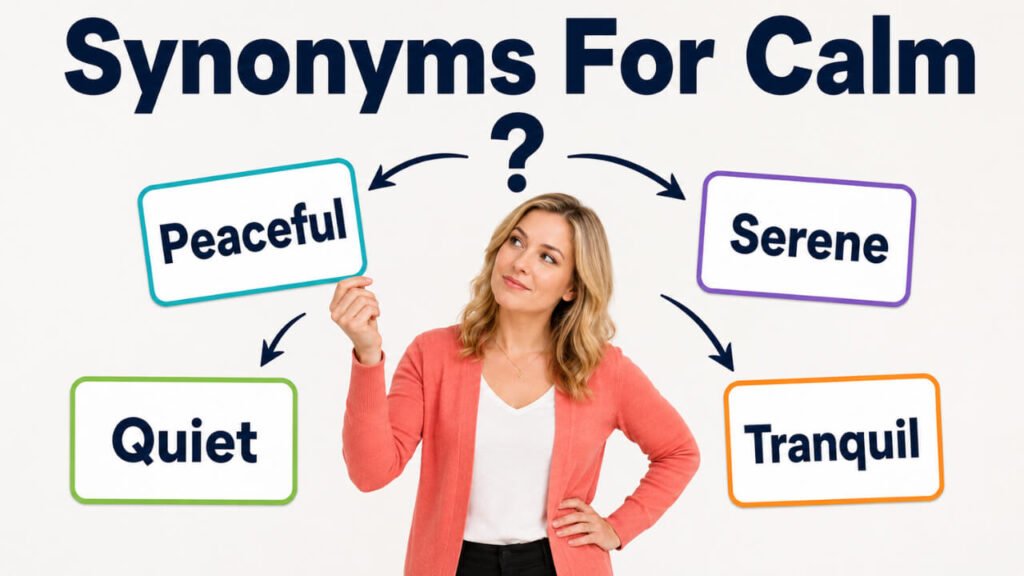
- Peaceful: Free from stress or conflict.
- Relaxed: Free from tension.
- Composed: Emotionally controlled.
- Tranquil: Quiet and peaceful.
- Serene: Deeply peaceful.
- Quiet: Free from noise.
- Still: Without movement.
- Collected: Calm under pressure.
- Untroubled: Not worried or disturbed.
- Soothing: Creating comfort and peace.
- Restful: Helping the mind relax.
- Gentle: Soft and mild.
- Placid: Calm and undisturbed.
- Mild: Soft, gentle, or not intense.
- Cool: Calm and controlled.
- Steady: Stable and not easily upset.
- Balanced: Emotionally even and controlled.
- Controlled: Managed without strong emotion.
- Level headed: Sensible and calm.
- Unruffled: Not upset or disturbed.
- Unshaken: Not emotionally affected.
- Patient: Calm while waiting or dealing with difficulty.
- At ease: Comfortable and relaxed.
- Carefree: Free from worry.
- Easygoing: Relaxed and not easily upset.
- Low pressure: Free from stress or urgency.
- Stable: Not changing suddenly.
- Settled: Calm after confusion or change.
- Clear headed: Able to think calmly.
- Self controlled: Able to manage feelings.
- Even tempered: Not easily angered.
- Cool headed: Calm in difficult moments.
- Unworried: Free from concern.
- Undisturbed: Not interrupted or upset.
- Silent: Without sound.
- Hushed: Very quiet and still.
- Muted: Soft and not loud.
- Soft: Gentle in sound, tone, or feeling.
- Light: Not heavy, tense, or serious.
- Comforting: Making someone feel safe.
- Reassuring: Removing worry or fear.
- Consoling: Giving comfort during sadness.
- Pacifying: Reducing anger or tension.
- Settling: Helping feelings become calm.
- Meditative: Quiet and thoughtful.
- Peaceable: Not wanting conflict.
- Harmonious: Free from disagreement.
- Orderly: Controlled and organized.
- Smooth: Without trouble or disturbance.
- Lullful: Creating a soft feeling of rest.
Read Also:
Synonyms for Scary
Synonyms for Calm by Context
When Calm Means Peaceful
Use these synonyms when describing a place, mood, atmosphere, or moment that feels free from stress and noise.
Synonyms: Peaceful, tranquil, serene, restful, placid.
Example: The peaceful morning made the house feel warm and safe.
Example: The village looked tranquil under the pale evening sky.
When Calm Means Relaxed
Use these words when someone is free from tension, nervousness, or emotional pressure.
Synonyms: Relaxed, at ease, easygoing, carefree, unworried.
Example: He felt relaxed after finishing his work.
Example: She looked at ease in the quiet room.
When Calm Means Emotionally Controlled
Use these synonyms when someone handles stress, anger, or fear without losing control.
Synonyms: Composed, collected, steady, controlled, level headed.
Example: The teacher stayed composed during the argument.
Example: A level headed response helped solve the problem.
When Calm Means Quiet or Still
Use these words when describing silence, low movement, or a soft environment.
Synonyms: Quiet, still, silent, hushed, muted.
Example: The street was quiet after the rain.
Example: The room became hushed when the speaker entered.
When Calm Means Comforting
Use these synonyms when something makes a person feel safer, softer, or less anxious.
Synonyms: Soothing, comforting, reassuring, consoling, pacifying.
Example: Her soothing words helped him breathe slowly.
Example: The doctor gave a reassuring smile.
Another Word for Calm
Another word for calm is peaceful. It is the best single replacement when you mean free from stress, noise, conflict, or disturbance. However, the best synonym depends on the context. Use composed for emotional control, relaxed for a stress free person, tranquil for a quiet place, and soothing for something that brings comfort.
Original: The room felt calm.
Better Option: The room felt peaceful.
Original: She stayed calm during the interview.
Better Option: She stayed composed during the interview.
Original: The water looked calm.
Better Option: The water looked still.
Original: His voice sounded calm.
Better Option: His voice sounded soothing.
When Not to Use “Calm”
Do not use calm when a more specific word would explain the meaning better. In emotional writing, calm may be too general if you mean controlled, patient, steady, or untroubled. In nature descriptions, calm may be less vivid than still, tranquil, or placid.
In formal writing, avoid repeating calm too often. Choose a synonym that matches the exact situation.
Weak: She was calm and gave a calm answer.
Better: She was composed and gave a steady answer.
Weak: The place was calm and nice.
Better: The place was peaceful and restful.
Weak: His calm voice made me calm.
Better: His soothing voice helped me relax.
Weak: The water was calm.
Better: The water was still and clear.
Words Commonly Confused With Calm
Calm vs Peaceful: Calm can describe people, places, feelings, or conditions. Peaceful usually suggests freedom from noise, stress, conflict, or disturbance.
Calm vs Relaxed: Calm means steady and not disturbed. Relaxed means free from tension or pressure.
Calm vs Composed: Calm is general, while composed means emotionally controlled, especially in a difficult situation.
Calm vs Quiet: Calm can describe emotion or atmosphere. Quiet mainly describes low sound or little noise.
Calm vs Still: Calm can describe feelings, people, or places. Still usually means not moving.
Calm vs Serene: Calm is simple and common. Serene sounds deeper, more graceful, and more peaceful.
Calm vs Soothing: Calm describes a peaceful state. Soothing describes something that creates that peaceful state.
Which Synonym Should You Choose?
Choose peaceful when describing a place, mood, life, or atmosphere without stress or conflict.
Choose relaxed when describing a person who feels free from tension or pressure.
Choose composed when someone stays emotionally controlled in a difficult situation.
Choose collected when someone thinks clearly and acts steadily under pressure.
Choose tranquil when describing a quiet and beautiful place or moment.
Choose serene when you want a graceful, deep, and almost spiritual sense of peace.
Choose quiet when the main idea is low noise.
Choose still when the main idea is no movement.
Choose soothing when something helps reduce fear, pain, stress, or sadness.
Choose level headed when you want to show sensible and calm judgment.
Real Life Examples of “Calm” in Sentences
Original: She looked calm before the test.
Better Option: She looked composed before the test.
Original: The beach was calm in the morning.
Better Option: The beach was tranquil in the morning.
Original: His calm words helped everyone.
Better Option: His reassuring words helped everyone.
Original: The baby became calm after hearing her voice.
Better Option: The baby became relaxed after hearing her voice.
Original: The lake was calm at sunset.
Better Option: The lake was still at sunset.
Original: He stayed calm during the crisis.
Better Option: He stayed collected during the crisis.
Original: The music made the room feel calm.
Better Option: The music made the room feel soothing.
Original: Her face seemed calm and soft.
Better Option: Her face seemed serene and soft.
Original: The office was calm after lunch.
Better Option: The office was quiet after lunch.
Original: A calm reply can prevent conflict.
Better Option: A measured reply can prevent conflict.
Synonym Groups and Usage Differences
Peace Group
This group focuses on freedom from stress, conflict, noise, or pressure. These words work well for places, moods, lifestyles, and atmospheres.
Examples: Peaceful, tranquil, serene, restful.
Example: The peaceful garden gave her space to think.
Emotional Control Group
This group describes people who manage feelings well and do not panic, shout, or react too strongly.
Examples: Composed, collected, controlled, steady.
Example: He stayed collected when the plan changed.
Quiet Group
This group focuses on silence, stillness, and low activity.
Examples: Quiet, still, silent, hushed.
Example: The hall was silent after the announcement.
Comfort Group
This group describes things that reduce stress, worry, pain, or sadness.
Examples: Soothing, comforting, reassuring, consoling.
Example: Her comforting words helped him feel safe.
Personality Group
This group describes people who are naturally relaxed, patient, or not easily upset.
Examples: Easygoing, patient, even tempered, level headed.
Example: His easygoing nature made the team feel comfortable.
Antonyms of Calm
Agitated: Nervous, upset, or restless.
Anxious: Worried or afraid about what may happen.
Stressed: Feeling mental or emotional pressure.
Tense: Nervous, tight, or uncomfortable.
Panicked: Filled with sudden fear.
Angry: Feeling strong displeasure or irritation.
Restless: Unable to relax or stay still.
Disturbed: Upset or mentally troubled.
Chaotic: Disordered and full of confusion.
Loud: Noisy and not quiet.
Stormy: Full of strong emotion, conflict, or bad weather.
Unstable: Likely to change suddenly or become unsafe.
Comparison: Calm vs Related Words
Calm vs Peaceful
Calm can describe a person, mood, place, or situation. Peaceful often describes an atmosphere without stress, noise, or conflict.
Example With Calm: She felt calm after the meeting.
Example With Peaceful: The garden felt peaceful after the rain.
Calm vs Relaxed
Calm means not disturbed or upset. Relaxed means free from physical or emotional tension.
Example With Calm: He stayed calm during the delay.
Example With Relaxed: He felt relaxed after the weekend.
Calm vs Composed
Calm is general. Composed means calm with emotional control, especially under pressure.
Example With Calm: She sounded calm on the phone.
Example With Composed: She remained composed during the debate.
Calm vs Quiet
Calm can describe emotion or atmosphere. Quiet mainly means little or no sound.
Example With Calm: The room felt calm.
Example With Quiet: The room was quiet.
Calm vs Serene
Calm is simple and common. Serene is more elegant and suggests deep peace.
Example With Calm: His face looked calm.
Example With Serene: His face looked serene.
Calm vs Soothing
Calm describes the peaceful state. Soothing describes something that creates peace.
Example With Calm: The child became calm.
Example With Soothing: The song was soothing.
Common Phrases and Expressions With Calm
Calm Down: Become less angry, upset, or nervous.
Stay Calm: Remain controlled and peaceful.
Keep Calm: Continue to stay relaxed during pressure.
Calm Voice: A soft and controlled way of speaking.
Calm Mind: A peaceful and clear mental state.
Calm Atmosphere: A place or mood without stress or disturbance.
Calm Before the Storm: A quiet time before trouble begins.
Calm Waters: Water with little movement.
Calm Reaction: A controlled response without panic.
Calm Presence: Someone whose behavior helps others feel safe.
Common Mistakes to Avoid
Avoid using calm too many times in the same paragraph. Repetition can make your writing sound plain. Use peaceful, relaxed, composed, tranquil, or soothing when they fit better.
Do not use quiet as a perfect replacement for calm in every sentence. Quiet mainly means low sound, while calm can describe emotion, behavior, atmosphere, or movement.
Avoid using relaxed when the meaning is emotional control under pressure. In that case, composed or collected is stronger.
Do not use serene for ordinary situations where simple language is better. Serene sounds more graceful and poetic.
Avoid vague phrases like very calm when a stronger word can help. Use serene, tranquil, composed, or unruffled for clearer meaning.
Conclusion
Learning synonyms for calm helps you choose better words for peaceful places, relaxed people, controlled emotions, quiet moments, and comforting actions. Use peaceful for a calm atmosphere, relaxed for a stress free person, composed for emotional control, tranquil for quiet beauty, and soothing for something that reduces worry. The right synonym makes your writing clearer, more natural, and more expressive in everyday, creative, academic, and professional contexts.
FAQs About Synonyms for Calm
What is the best synonym for calm?
The best synonym for calm is peaceful when describing a quiet mood or atmosphere. For a person, composed or relaxed may be better.
What is a formal synonym for calm?
Formal synonyms for calm include composed, collected, steady, controlled, and level headed. These work well in professional or serious writing.
What is another word for calm person?
Another word for a calm person is composed. You can also use collected, relaxed, patient, easygoing, or even tempered.
What is a synonym for calm place?
Good synonyms for a calm place include peaceful, tranquil, serene, quiet, restful, and placid.
What is a stronger word than calm?
A stronger word than calm depends on the meaning. Use serene for deep peace, unruffled for emotional control, and tranquil for a very peaceful place.
What is the difference between calm and peaceful?
Calm can describe a person, feeling, place, or situation. Peaceful usually describes freedom from stress, conflict, noise, or disturbance.
What is the opposite of calm?
The opposite of calm can be agitated, anxious, stressed, tense, panicked, restless, chaotic, or disturbed, depending on the sentence.
