
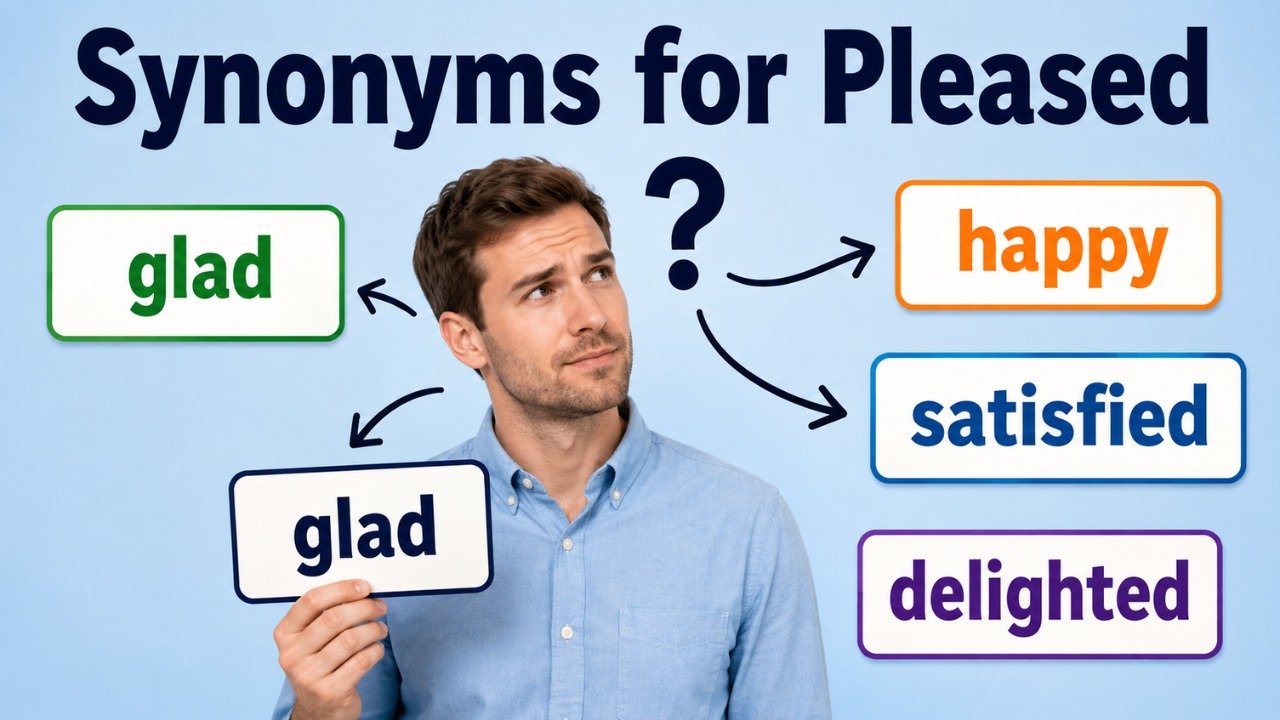
Quick Answer: Common synonyms for pleased include happy, glad, delighted, satisfied, content, thrilled, gratified, joyful, cheerful, and overjoyed. Use happy for general positive feelings, glad for casual conversation, delighted for stronger pleasure, satisfied when expectations have been met, gratified in formal contexts, and thrilled when expressing strong excitement. The most suitable synonym depends on whether you mean happiness, satisfaction, approval, relief, or enthusiastic pleasure.
Pronunciation and Word Details
Word: Pleased
Pronunciation: /pliːzd/
Part of Speech: Adjective
Meaning: Feeling happy, satisfied, or approving because something desirable has happened.
US Pronunciation:
UK Pronunciation:
What Does “Pleased” Mean?
Pleased means feeling happy, satisfied, or content because something has happened in a desirable way.
As an adjective, pleased commonly describes a positive emotional reaction to news, results, behavior, achievements, or experiences.
Someone may be pleased because an outcome meets expectations.
Example: She was pleased with her examination results.
It can also show polite happiness.
Example: I am pleased to meet you.
In professional or formal language, pleased often communicates approval or satisfaction without sounding overly emotional.
Example: The teacher was pleased with the improvement in the class.
The exact meaning can range from mild satisfaction to genuine happiness, so different synonyms are useful in different situations.
Meaning, Tone, and Context of “Pleased”
Pleased usually has a positive, polite, and moderately emotional tone. It is stronger than simple acceptance but often less intense than words such as thrilled, ecstatic, or overjoyed.
Neutral Context: Pleased can describe ordinary happiness or satisfaction.
Example: He seemed pleased with the result.
Formal Context: Pleased works naturally in professional, academic, and polite communication.
Example: We are pleased with the progress of the project.
Personal Context: It can express happiness about another person’s success.
Example: Her parents were pleased with her achievement.
Approval Context: Pleased can indicate that someone considers an action or result satisfactory.
Example: The coach was pleased with the team’s performance.
Emotional Context: Stronger alternatives such as delighted, thrilled, or overjoyed may be better when the feeling is intense.
Because pleased is relatively flexible, it works well in conversation, essays, reports, descriptions, and polite communication.
When and How to Use “Pleased”
For Happiness: Use pleased when someone feels positively about an event or situation.
Example: She was pleased to hear the good news.
For Satisfaction: Use pleased when an outcome meets expectations.
Example: The customer was pleased with the final result.
For Approval: Use pleased when someone approves of another person’s actions or performance.
Example: The teacher was pleased with his effort.
For Polite Communication: Pleased is useful when expressing happiness in a respectful or professional way.
Example: I am pleased to accept the invitation.
For Positive Results: Use pleased when discussing successful outcomes.
Example: The researchers were pleased with the initial findings.
For Meeting Someone: Pleased appears in polite introductions.
Example: I am pleased to meet you.
Best Synonyms for Pleased
Happy: Feeling joy or general satisfaction.
Example: She was happy with her new position.
Glad: Feeling pleased about something positive, especially in conversation.
Example: I am glad you decided to come.
Delighted: Feeling a high degree of pleasure or happiness.
Example: They were delighted by the surprise.
Satisfied: Feeling that expectations, needs, or requirements have been met.
Example: She was satisfied with the quality of the work.
Content: Feeling peacefully happy and comfortable with a situation.
Example: He felt content with the life he had built.
Thrilled: Feeling extremely excited and pleased.
Example: She was thrilled to receive the award.
Gratified: Feeling pleased because an achievement or response has brought satisfaction.
Example: The author was gratified by the positive reaction.
Joyful: Feeling or showing strong happiness.
Example: Everyone was joyful after hearing the announcement.
Cheerful: Noticeably happy, positive, and optimistic.
Example: He remained cheerful throughout the celebration.
Overjoyed: Feeling extremely happy because of very good news or an important event.
Example: Her family was overjoyed by her return.
50 Synonyms for Pleased with Short Meanings
- Happy: Feeling general pleasure or happiness.
- Glad: Feeling happy about a particular situation.
- Delighted: Feeling strong pleasure or satisfaction.
- Satisfied: Feeling that expectations have been fulfilled.
- Content: Peacefully happy with what one has.
- Thrilled: Extremely pleased and excited.
- Gratified: Pleased because of achievement or appreciation.
- Joyful: Full of happiness or pleasure.
- Cheerful: Noticeably happy and positive.
- Overjoyed: Extremely happy about something.
- Ecstatic: Overwhelmingly happy and excited.
- Elated: Extremely pleased and emotionally uplifted.
- Jubilant: Showing great happiness after success.
- Contented: Feeling peacefully satisfied.
- Fulfilled: Feeling satisfied because important needs or goals were achieved.
- Cheered: Made happier or more hopeful.
- Excited: Feeling enthusiastic happiness about something.
- Enthusiastic: Showing eager and positive interest.
- Appreciative: Feeling thankful and pleased.
- Thankful: Feeling gratitude and happiness.
- Grateful: Feeling pleased because of kindness or benefit received.
- Relieved: Pleased because worry or difficulty has ended.
- Reassured: Feeling better and more confident after uncertainty.
- Comforted: Made happier or calmer after distress.
- Amused: Pleased or entertained by something funny.
- Entertained: Enjoyably occupied or interested.
- Charmed: Greatly pleased by an attractive quality or manner.
- Enchanted: Deeply delighted or fascinated.
- Captivated: Strongly pleased and interested.
- Impressed: Pleased because something seems admirable.
- Proud: Pleased because of achievement or association.
- Honored: Pleased because of receiving respect or recognition.
- Flattered: Pleased because of praise or attention.
- Encouraged: Feeling more hopeful and pleased about progress.
- Optimistic: Feeling positive about what will happen.
- Buoyant: Cheerful, confident, and emotionally positive.
- Lighthearted: Cheerful and free from serious worry.
- Merry: Cheerful and pleasantly lively.
- Jovial: Friendly, cheerful, and good humored.
- Gleeful: Showing lively happiness or delight.
- Radiant: Visibly happy and delighted.
- Beaming: Showing obvious happiness through expression.
- Upbeat: Positive, cheerful, and hopeful.
- Positive: Feeling favorable or approving.
- Agreeable: Pleasantly satisfied or willing.
- Approving: Showing satisfaction with something.
- Favorable: Showing positive approval or acceptance.
- Well satisfied: Fully satisfied with a result.
- At ease: Comfortable and peacefully satisfied.
- In good spirits: Feeling cheerful and positive.
Read Also:
Synonyms for Nasty
Synonyms for Pleased by Context
When Pleased Means Happy
When pleased simply means feeling happy because something positive happened, common alternatives include happy, glad, cheerful, joyful, and content.
Happy: A broad word suitable for most situations.
Example: She was happy to see her old friends again.
Glad: Natural in everyday conversation.
Example: I am glad everything worked out.
Joyful: Stronger and more emotional than pleased.
Example: The family felt joyful during the celebration.
Cheerful: Best when happiness is visible through someone’s behavior.
Example: He looked cheerful after receiving the news.
When Pleased Means Satisfied
Pleased often describes satisfaction with quality, progress, performance, or results.
Useful alternatives include satisfied, content, contented, fulfilled, and gratified.
Satisfied: Best when expectations have been met.
Example: The manager was satisfied with the final report.
Content: Suggests calm and peaceful satisfaction.
Example: She felt content with her decision.
Gratified: More formal and often connected with achievement or recognition.
Example: The researcher was gratified by the response to the study.
When Pleased Means Delighted
When the emotion is stronger than ordinary happiness, use delighted, thrilled, overjoyed, ecstatic, elated, or jubilant.
Delighted: Strong but still suitable for polite communication.
Example: We were delighted to receive your invitation.
Thrilled: Adds strong excitement.
Example: He was thrilled to win the competition.
Overjoyed: Expresses very intense happiness.
Example: They were overjoyed when their daughter returned home.
Elated: Often follows success or excellent news.
Example: She felt elated after completing the difficult challenge.
When Pleased Means Approving
Sometimes pleased means that someone approves of an action, decision, result, or performance.
Useful alternatives include approving, satisfied, impressed, favorable, and proud.
Approving: Shows direct approval.
Example: Her teacher gave an approving smile.
Impressed: Suggests admiration as well as pleasure.
Example: The judges were impressed by his presentation.
Proud: Appropriate when pleasure comes from achievement.
Example: His parents were proud of his progress.
When Pleased Means Relieved
Pleased can sometimes describe happiness that follows the end of worry or uncertainty.
Useful alternatives include relieved, reassured, comforted, and encouraged.
Relieved: Best when a worry has ended.
Example: She was relieved to learn that everyone was safe.
Reassured: Best when confidence returns after uncertainty.
Example: His explanation left her reassured.
Encouraged: Useful when positive signs create hope.
Example: The team felt encouraged by the early results.
Another Word for Pleased
The best single replacement for pleased is often happy, but the ideal word depends on the reason and intensity of the emotion.
Use satisfied when expectations have been met, delighted when happiness is stronger, glad for conversational language, and gratified for formal satisfaction.
Original: She was pleased with her final results.
Better Option: She was satisfied with her final results.
Original: I am pleased you could join us.
Better Option: I am glad you could join us.
Original: They were pleased by the wonderful surprise.
Better Option: They were delighted by the wonderful surprise.
Original: The professor was pleased by the positive response.
Better Option: The professor was gratified by the positive response.
When Not to Use “Pleased”
Pleased is useful, but it can sound too mild, repetitive, or general when a more precise emotion is needed.
When the Emotion Is Very Strong
Pleased may underestimate intense excitement or happiness.
Weak: She was pleased to win the championship.
Better: She was thrilled to win the championship.
When You Mean Satisfaction Specifically
Use satisfied when the emphasis is on expectations or standards being met.
Weak: The inspector was pleased with the completed work.
Better: The inspector was satisfied with the completed work.
When You Mean Relief
If the positive emotion follows worry, relieved is clearer.
Weak: He was pleased to discover that the test results were normal.
Better: He was relieved to discover that the test results were normal.
When You Mean Pride
If happiness comes directly from someone’s achievement, proud may be more precise.
Weak: She was pleased with her son’s achievement.
Better: She was proud of her son’s achievement.
When Pleased Becomes Repetitive
Using the same word several times makes writing less expressive.
Weak: He was pleased with the results, pleased with the team, and pleased with the progress.
Better: He was satisfied with the results, proud of the team, and encouraged by the progress.
Words Commonly Confused With Pleased
Pleased vs Happy: Happy is broader and can describe general emotional well being. Pleased usually refers to a particular reason or outcome.
Pleased vs Satisfied: Pleased emphasizes positive emotion, while satisfied emphasizes expectations or standards being met.
Pleased vs Delighted: Delighted expresses stronger happiness than pleased.
Pleased vs Glad: Glad is usually more conversational and often follows positive news or relief.
Pleased vs Gratified: Gratified is more formal and frequently describes satisfaction caused by achievement, recognition, or appreciation.
Pleased vs Proud: Proud connects happiness with achievement, identity, or association.
Pleased vs Relieved: Relieved describes happiness caused by the removal of worry, fear, or difficulty.
Pleased vs Thrilled: Thrilled includes strong excitement, while pleased can describe much milder happiness.
Which Synonym Should You Choose?
Choose happy when you need a simple and versatile replacement for pleased.
Choose glad in everyday conversation or when responding to positive news.
Choose delighted when you want to express stronger pleasure while maintaining a polite tone.
Choose satisfied when expectations, requirements, or standards have been met.
Choose gratified in formal writing when pleasure comes from achievement, recognition, or appreciation.
Choose thrilled when happiness includes strong excitement.
Choose relieved when happiness follows worry, danger, or uncertainty.
Choose proud when pleasure comes from an achievement or someone’s success.
Choose content when the feeling is peaceful and calm rather than exciting.
Choose overjoyed when the emotion is exceptionally strong.
For essays and reports, satisfied, gratified, encouraged, and impressed often provide greater precision.
For casual speech, happy, glad, and thrilled usually sound more natural.
For professional communication, pleased, satisfied, and delighted are often suitable choices.
Real Life Examples of “Pleased” in Sentences
Original: She was pleased with the service she received.
Better Option: She was satisfied with the service she received.
Original: I am pleased that you came to the event.
Better Option: I am glad that you came to the event.
Original: The teacher was pleased with his improvement.
Better Option: The teacher was impressed by his improvement.
Original: They were pleased to hear the wonderful news.
Better Option: They were delighted to hear the wonderful news.
Original: He was pleased when the problem was finally solved.
Better Option: He was relieved when the problem was finally solved.
Original: Her parents were pleased with her success.
Better Option: Her parents were proud of her success.
Original: The team was pleased with its early progress.
Better Option: The team was encouraged by its early progress.
Original: She was pleased to receive the unexpected award.
Better Option: She was thrilled to receive the unexpected award.
Original: The writer was pleased by the positive reaction.
Better Option: The writer was gratified by the positive reaction.
Original: Everyone was pleased when the family reunited.
Better Option: Everyone was overjoyed when the family reunited.
Synonym Groups and Usage Differences
General Happiness Group
This group includes happy, glad, cheerful, joyful, and merry. These words describe positive feelings without necessarily focusing on achievement or satisfaction.
Example: She was glad to spend the evening with her friends.
Satisfaction Group
Satisfied, content, contented, fulfilled, and gratified describe pleasure connected with expectations, needs, achievements, or outcomes.
Example: He was satisfied with the improvements he had made.
Strong Delight Group
Delighted, thrilled, ecstatic, elated, jubilant, and overjoyed express stronger emotions than pleased.
Example: She was thrilled when her application was accepted.
Approval Group
Approving, impressed, proud, and favorable describe positive judgments about actions, results, or achievements.
Example: The supervisor was impressed by the team’s preparation.
Relief Group
Relieved, reassured, and comforted describe positive feelings that appear after worry, fear, or uncertainty decreases.
Example: The family was relieved when everyone arrived safely.
Visible Happiness Group
Beaming, radiant, gleeful, and cheerful describe happiness that can be seen in someone’s face, voice, or behavior.
Example: She was beaming after hearing the announcement.
Antonyms of Pleased
The opposite of pleased depends on whether the word means happy, satisfied, approving, or delighted.
Displeased: Feeling unhappy or dissatisfied.
Unhappy: Not feeling happy or pleased.
Dissatisfied: Feeling that expectations were not met.
Disappointed: Unhappy because something was worse than expected.
Upset: Emotionally troubled or unhappy.
Annoyed: Slightly angry or irritated.
Angry: Feeling strong displeasure.
Frustrated: Upset because progress or expectations have been blocked.
Discontented: Not satisfied with a situation.
Unimpressed: Not feeling admiration or approval.
Concerned: Worried rather than pleased about something.
Miserable: Extremely unhappy.
Comparison: Pleased vs Related Words
Pleased vs Happy
Pleased usually refers to happiness caused by a specific event, result, or action. Happy can describe either a specific reaction or a person’s general emotional state.
Example With Pleased: She was pleased with her examination results.
Example With Happy: She felt happy throughout the entire holiday.
Pleased vs Glad
Glad is more conversational and often relates to positive news, relief, or someone’s presence.
Example With Pleased: I am pleased with your progress.
Example With Glad: I am glad you decided to stay.
Pleased vs Delighted
Delighted communicates stronger pleasure and enthusiasm.
Example With Pleased: He was pleased to receive the invitation.
Example With Delighted: He was delighted to receive the unexpected invitation.
Pleased vs Satisfied
Satisfied focuses more directly on whether expectations or requirements were met.
Example With Pleased: The manager was pleased with the presentation.
Example With Satisfied: The manager was satisfied that the presentation met every requirement.
Pleased vs Gratified
Gratified is more formal and often describes satisfaction after receiving recognition or seeing positive results.
Example With Pleased: She was pleased by their support.
Example With Gratified: She was gratified by the widespread support for her efforts.
Pleased vs Thrilled
Thrilled indicates much stronger excitement.
Example With Pleased: He was pleased to be selected.
Example With Thrilled: He was thrilled to be selected for the final round.
Pleased vs Proud
Proud specifically connects pleasure with accomplishment, identity, or association.
Example With Pleased: The parents were pleased with their daughter’s grades.
Example With Proud: The parents were proud of their daughter’s hard work.
Common Phrases and Expressions With Pleased
Pleased With: Satisfied or happy about something.
Example: She was pleased with the outcome.
Pleased To Meet You: A polite expression used when meeting someone.
Example: I am pleased to meet you.
Pleased To Hear: Happy about receiving certain information.
Example: We were pleased to hear that you recovered quickly.
Pleased To Announce: A formal expression introducing positive news.
Example: She was pleased to announce the successful completion of the project.
Pleased To Help: Happy or willing to provide assistance.
Example: I am pleased to help whenever possible.
Pleased To Know: Happy after learning a fact or piece of information.
Example: He was pleased to know that his work was appreciated.
Very Pleased: Strongly satisfied or happy.
Example: The teacher was very pleased with the class.
Quite Pleased: Moderately or noticeably satisfied.
Example: She seemed quite pleased with the arrangement.
Genuinely Pleased: Sincerely happy or satisfied.
Example: He appeared genuinely pleased by the compliment.
Pleasantly Pleased: Positively satisfied, although this wording is less common and can often be replaced with pleasantly surprised.
Common Mistakes to Avoid
Using Pleased for Extreme Happiness: Pleased can be too mild when describing intense excitement. Use thrilled, ecstatic, delighted, or overjoyed when the emotion is stronger.
Repeating Pleased Too Often: Repetition makes writing sound limited. Replace repeated uses with happy, satisfied, glad, delighted, proud, or gratified depending on meaning.
Confusing Pleased With Satisfied: These words overlap, but satisfied is more precise when discussing standards, quality, requirements, or expectations.
Using Strong Synonyms in Mild Situations: Ecstatic and overjoyed sound unnatural when the emotion is only moderate.
Weak: She was ecstatic that lunch arrived on time.
Better: She was pleased that lunch arrived on time.
Choosing Glad in Very Formal Writing: Glad is natural in conversation but may sound less formal than pleased, delighted, or gratified in certain contexts.
Ignoring the Cause of the Emotion: Ask why the person feels pleased. If worry ended, choose relieved. If expectations were met, choose satisfied. If achievement caused the feeling, choose proud or gratified.
Using Unnatural Combinations: Some synonyms cannot replace pleased directly without changing sentence structure.
Weak: She was content to hear about his promotion.
Better: She was delighted to hear about his promotion.
Conclusion
The best synonyms for pleased depend on the type and strength of the positive feeling being described. Happy and glad work well for general happiness, while satisfied emphasizes fulfilled expectations. Delighted, thrilled, and overjoyed express stronger excitement. Gratified suits formal satisfaction, proud connects pleasure with achievement, and relieved describes happiness after worry ends. Choosing a synonym according to context makes your writing clearer, more natural, and more emotionally precise.
FAQs About Synonyms for Pleased
What Is the Best Synonym for Pleased?
The best general synonym is happy. However, satisfied, delighted, glad, gratified, and thrilled may be more precise depending on the context.
What Is a Formal Synonym for Pleased?
Gratified is a strong formal synonym. Satisfied and delighted can also work well in professional or formal writing.
What Is a Stronger Word Than Pleased?
Delighted, thrilled, elated, ecstatic, and overjoyed express stronger positive emotions than pleased.
Are Pleased and Happy the Same?
They are similar, but happy is broader. Pleased usually describes happiness connected with a specific event, action, or result.
What Is Another Word for Very Pleased?
Good alternatives include delighted, thrilled, overjoyed, elated, and ecstatic.
Can Satisfied Replace Pleased?
Yes, especially when pleased refers to expectations, standards, quality, or results being met. It may not work when pleased simply means emotionally happy.
What Is the Opposite of Pleased?
Common opposites include displeased, unhappy, dissatisfied, disappointed, annoyed, and frustrated.
