
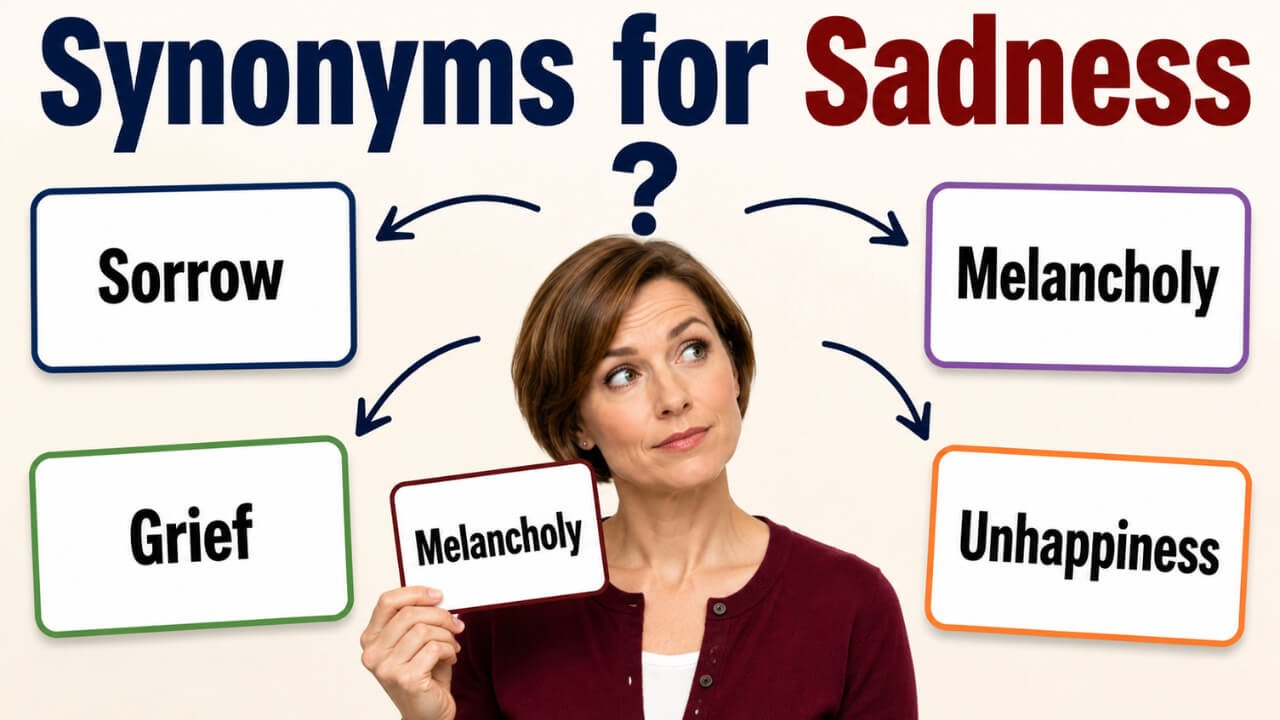
Quick Answer: The best synonyms for sadness include sorrow, grief, unhappiness, misery, melancholy, gloom, heartache, despair, regret, and dejection. The keyword synonyms for sadness usually refers to words that describe emotional pain, low mood, loss, disappointment, or deep unhappiness. Use sorrow for serious sadness, grief for loss, melancholy for quiet sadness, misery for strong suffering, regret for sadness about the past, and dejection for feeling discouraged.
Pronunciation and Word Details
Word: Sadness.
Pronunciation: /ˈsædnəs/.
Part of Speech: Noun.
Meaning: Sadness means a feeling of unhappiness, emotional pain, sorrow, or low mood.
US Pronunciation:
UK Pronunciation:
What Does “Sadness” Mean?
Direct Answer: Sadness means the feeling of being unhappy, hurt, disappointed, lonely, or emotionally low.
Sadness is a noun. It names an emotion that people feel after loss, failure, rejection, disappointment, bad news, loneliness, or painful memories. It can be mild, serious, temporary, or deep depending on the situation.
In sentence contexts, sadness can describe a personal feeling, a mood in a story, a reaction to an event, or the emotional tone of writing. For example, a character can feel sadness after saying goodbye, a poem can express sadness, and a quiet room can carry a sense of sadness.
Meaning, Tone, and Context of “Sadness”
Sadness has a neutral and emotional tone. It is not too formal or too casual, so it works well in everyday speech, stories, essays, emotional writing, mental health discussions, and personal reflection.
The word is softer than grief and less intense than despair or misery. It can describe a simple unhappy feeling or a deeper emotional state. In academic or psychological writing, sadness may describe a basic human emotion. In creative writing, words like sorrow, melancholy, heartache, and gloom can create a more specific emotional mood.
When and How to Use “Sadness”
For General Emotion: Use sadness when describing a normal feeling of unhappiness.
Example: She felt sadness after hearing the news.
For Loss: Use sadness when someone feels emotional pain after losing a person, place, chance, or relationship.
Example: His sadness grew after his friend moved away.
For Disappointment: Use sadness when a hope, plan, or expectation does not happen.
Example: There was sadness in her voice when the trip was canceled.
For Creative Writing: Use sadness to describe mood, tone, atmosphere, or character emotion.
Example: The old song carried a deep sadness.
For Reflection: Use sadness when talking about memories, regrets, or emotional lessons.
Example: He remembered the moment with sadness and regret.
Best Synonyms for Sadness
Sorrow: Deep emotional sadness, often serious or heartfelt.
Example: Her eyes showed quiet sorrow.
Grief: Strong sadness caused by loss, especially death or separation.
Example: The family shared their grief in silence.
Unhappiness: A general state of not feeling happy or satisfied.
Example: His unhappiness was clear in his expression.
Misery: Very strong sadness, suffering, or discomfort.
Example: She lived in misery after the painful mistake.
Melancholy: A quiet, thoughtful, and often gentle sadness.
Example: The rainy evening filled him with melancholy.
Gloom: A dark, heavy, or hopeless feeling of sadness.
Example: A sense of gloom settled over the room.
Heartache: Emotional pain caused by love, loss, or disappointment.
Example: The goodbye left her with heartache.
Despair: Complete sadness with little or no hope.
Example: He felt despair after many failed attempts.
Regret: Sadness about something done, missed, or lost in the past.
Example: She spoke with regret about her decision.
Dejection: Sadness caused by failure, rejection, or discouragement.
Example: His dejection was obvious after the result.
50 Synonyms for Sadness with Short Meanings
- Sorrow: Deep emotional sadness.
- Grief: Sadness caused by loss.
- Unhappiness: A lack of happiness or joy.
- Misery: Great sadness or suffering.
- Melancholy: Quiet and thoughtful sadness.
- Gloom: Dark or heavy sadness.
- Heartache: Emotional pain from love or loss.
- Despair: Sadness with no hope.
- Regret: Sadness about the past.
- Dejection: Discouraged sadness.
- Depression: Deep and lasting low mood.
- Distress: Emotional pain or worry.
- Anguish: Severe emotional suffering.
- Pain: Emotional hurt or suffering.
- Hurt: Emotional injury or upset.
- Woe: Serious sadness or trouble.
- Desolation: Lonely and empty sadness.
- Hopelessness: Sadness caused by lost hope.
- Despondency: Low spirits and discouragement.
- Dismay: Shocked sadness or disappointment.
- Disappointment: Sadness when hopes are not met.
- Discouragement: Sadness from losing confidence.
- Low Spirits: A sad or unhappy mood.
- Blue Mood: A casual feeling of sadness.
- Somberness: Serious and quiet sadness.
- Heaviness: A weighed down emotional feeling.
- Dreariness: Dull and gloomy sadness.
- Bitterness: Sadness mixed with anger or resentment.
- Lamentation: Expressed grief or sorrow.
- Mourning: Sadness after a death or loss.
- Bereavement: Grief after losing someone.
- Agony: Intense emotional pain.
- Torment: Severe mental or emotional suffering.
- Wretchedness: Extreme unhappiness or misery.
- Forlornness: Lonely and abandoned sadness.
- Loneliness: Sadness from feeling alone.
- Homesickness: Sadness from missing home.
- Nostalgia: Sad longing for the past.
- Ruefulness: Mild regret or sorrow.
- Remorse: Deep regret for a wrong action.
- Guilt: Sadness from feeling responsible.
- Pessimism: Sad negative expectation.
- Bleakness: Cold and hopeless sadness.
- Lowness: A low emotional state.
- Tearfulness: Readiness to cry.
- Heartbreak: Deep sadness after emotional loss.
- Wistfulness: Gentle sadness mixed with longing.
- Pathos: A quality that causes pity or sadness.
- Tragedy: Deep sadness from a painful event.
- Affliction: Pain, trouble, or emotional suffering.
Read Also:
Synonyms for Enhance

Synonyms for Sadness by Context
When Sadness Means Deep Sorrow
Sorrow: Use sorrow for deep, serious emotional pain.
Example: The letter was full of sorrow.
Grief: Use grief when sadness comes from loss.
Example: His grief was strongest in the quiet moments.
Anguish: Use anguish for severe emotional suffering.
Example: She cried in anguish after the terrible news.
When Sadness Means Low Mood
Unhappiness: Use unhappiness for a general lack of joy.
Example: His unhappiness affected his work.
Melancholy: Use melancholy for quiet, reflective sadness.
Example: The old photograph brought a feeling of melancholy.
Low Spirits: Use low spirits for a simple sad mood.
Example: He was in low spirits after the meeting.
When Sadness Means Hopelessness
Despair: Use despair when sadness includes no hope.
Example: She felt despair after losing everything.
Hopelessness: Use hopelessness when someone believes things will not improve.
Example: The long delay created a sense of hopelessness.
Despondency: Use despondency for deep discouragement and low spirits.
Example: His despondency grew after repeated failures.
When Sadness Means Regret
Regret: Use regret for sadness about a choice, mistake, or missed chance.
Example: He felt regret after speaking harshly.
Remorse: Use remorse for deep regret about a wrong action.
Example: She showed remorse for hurting her friend.
Ruefulness: Use ruefulness for gentle regret or mild sorrow.
Example: He smiled with ruefulness at the memory.
When Sadness Means Emotional Pain
Heartache: Use heartache for sadness from love, loss, or disappointment.
Example: The breakup left him with heartache.
Heartbreak: Use heartbreak for deep emotional pain after loss or rejection.
Example: Her heartbreak was clear in her silence.
Hurt: Use hurt for emotional injury or personal pain.
Example: His words caused lasting hurt.
Another Word for Sadness
A strong single replacement for sadness is sorrow. It is emotional, clear, and useful when the feeling is deeper than simple unhappiness. However, the best alternative depends on context. Use grief for loss, melancholy for quiet sadness, regret for sadness about the past, and despair for sadness without hope.
Original: Her sadness was clear after the goodbye.
Better Option: Her sorrow was clear after the goodbye.
Original: The story is filled with sadness.
Better Option: The story is filled with melancholy.
Original: He felt sadness after his mistake.
Better Option: He felt regret after his mistake.
Original: The family showed sadness after the loss.
Better Option: The family showed grief after the loss.
When Not to Use “Sadness”
Do not use sadness when a more specific emotional word is needed. If the feeling comes from death or serious loss, grief may be better. If the feeling is about a past mistake, regret or remorse may be clearer. If the emotion is intense and hopeless, despair may be stronger.
Also avoid repeating sadness many times in emotional writing. It can make the text sound plain or weak. Replace it with sorrow, grief, melancholy, heartache, regret, or gloom when the context needs more detail.
Weak: The sadness in the room made everyone feel sadness.
Better: The sorrow in the room made everyone feel heavy and quiet.
Weak: He had sadness about his mistake.
Better: He felt regret about his mistake.
Weak: She had sadness after the death of her father.
Better: She felt grief after the death of her father.
Weak: The poem has sadness and sadness in every line.
Better: The poem has melancholy and quiet sorrow in every line.
Words Commonly Confused With Sadness
Sadness vs Sorrow: Sadness is a general feeling of unhappiness. Sorrow is deeper, more serious, and more emotional.
Sadness vs Grief: Sadness can come from many causes. Grief usually comes from loss, death, separation, or major emotional pain.
Sadness vs Depression: Sadness is a normal emotion that may pass with time. Depression can describe a deeper, longer, and more serious low mood.
Sadness vs Melancholy: Sadness is general unhappiness. Melancholy is quiet, reflective, and often poetic sadness.
Sadness vs Misery: Sadness may be mild or serious. Misery means strong suffering or deep unhappiness.
Sadness vs Regret: Sadness is a broad emotion. Regret is sadness about something done, missed, or lost in the past.
Which Synonym Should You Choose?
Choose sorrow when writing about deep emotional pain.
Choose grief when writing about death, loss, separation, or mourning.
Choose unhappiness when you need a simple and general word.
Choose misery when the feeling is very strong and painful.
Choose melancholy when the sadness is quiet, reflective, or poetic.
Choose gloom when the mood feels dark, heavy, or negative.
Choose heartache when sadness comes from love, loss, rejection, or emotional disappointment.
Choose despair when sadness includes hopelessness.
Choose regret when sadness is connected to a past choice or mistake.
Choose dejection when sadness comes from failure, rejection, or discouragement.
Real Life Examples of “Sadness” in Sentences
Original: She felt sadness after her friend left.
Better Option: She felt sorrow after her friend left.
Original: His sadness was caused by the loss of his pet.
Better Option: His grief was caused by the loss of his pet.
Original: The movie shows sadness in a powerful way.
Better Option: The movie shows heartache in a powerful way.
Original: There was sadness in his voice.
Better Option: There was melancholy in his voice.
Original: He carried sadness from his past mistakes.
Better Option: He carried regret from his past mistakes.
Original: The room was filled with sadness.
Better Option: The room was filled with gloom.
Original: Her sadness grew after every failure.
Better Option: Her dejection grew after every failure.
Original: The poem expresses sadness and longing.
Better Option: The poem expresses wistfulness and longing.
Original: He felt sadness because nothing seemed possible.
Better Option: He felt despair because nothing seemed possible.
Original: The letter carried a sense of sadness.
Better Option: The letter carried a sense of sorrow.
Synonym Groups and Usage Differences
Loss Group
Words like grief, mourning, bereavement, sorrow, and lamentation describe sadness caused by death, separation, or serious loss. These words are stronger and more specific than general sadness.
Example: The family went through grief after the loss.
Low Mood Group
Words like unhappiness, melancholy, gloom, low spirits, and lowness describe a sad emotional state. These words can be mild, quiet, or reflective.
Example: A feeling of melancholy followed the quiet evening.
Pain Group
Words like heartache, heartbreak, anguish, agony, and torment describe strong emotional pain. These words work well when sadness feels intense and personal.
Example: The sudden goodbye caused real heartache.
Regret Group
Words like regret, remorse, ruefulness, guilt, and bitterness describe sadness connected to actions, memories, choices, or mistakes. These words are useful for reflective writing.
Example: He spoke with regret about the missed chance.
Hopelessness Group
Words like despair, hopelessness, despondency, bleakness, and pessimism describe sadness that feels dark or without hope. These words are stronger than ordinary sadness.
Example: Repeated failure filled him with despair.
Antonyms of Sadness
Happiness: A feeling of joy or pleasure.
Joy: Strong happiness or delight.
Gladness: A light feeling of happiness.
Cheerfulness: A bright and positive mood.
Delight: Great pleasure or enjoyment.
Contentment: Quiet satisfaction and peace.
Pleasure: A feeling of enjoyment.
Hope: A positive belief that things can improve.
Comfort: Emotional ease and relief.
Peace: Calmness without emotional trouble.
Relief: A good feeling after worry or pain ends.
Optimism: A hopeful and positive outlook.
Comparison: Sadness vs Related Words
Sadness vs Sorrow
Sadness is a general word for unhappiness. Sorrow is deeper and often more serious.
Example With Sadness: She felt sadness after hearing the news.
Example With Sorrow: She felt sorrow after hearing the news.
Sadness vs Grief
Sadness can describe any unhappy feeling. Grief usually describes pain after a serious loss.
Example With Sadness: His sadness lasted all evening.
Example With Grief: His grief lasted long after the funeral.
Sadness vs Melancholy
Sadness is simple and direct. Melancholy is softer, quieter, and more reflective.
Example With Sadness: The song reminded her of sadness.
Example With Melancholy: The song filled her with melancholy.
Sadness vs Misery
Sadness can be mild or strong. Misery is intense unhappiness or suffering.
Example With Sadness: He felt sadness after the argument.
Example With Misery: He lived in misery after the painful event.
Sadness vs Regret
Sadness is a broad feeling. Regret is sadness about the past, especially a choice or mistake.
Example With Sadness: She felt sadness at the memory.
Example With Regret: She felt regret about the decision.
Common Phrases and Expressions With Sadness
Deep Sadness: Strong emotional unhappiness.
Great Sadness: Serious or powerful sadness.
Overwhelming Sadness: Sadness that feels too strong to handle.
Sudden Sadness: Sadness that appears quickly.
Quiet Sadness: Sadness shown in a calm or silent way.
A Sense of Sadness: A feeling or atmosphere of sadness.
Filled With Sadness: Feeling a strong amount of sadness.
Tears of Sadness: Crying because of emotional pain.
Sadness in Her Eyes: Visible emotional pain or unhappiness.
Sadness and Regret: Unhappiness mixed with thoughts about the past.
Common Mistakes to Avoid
A common mistake is using sadness for every emotional situation. The word is clear, but it can become weak when repeated too often. Use grief for loss, regret for past mistakes, heartache for emotional pain, melancholy for quiet sadness, and despair for hopeless sadness.
Another mistake is confusing sadness with depression. Sadness is a normal emotion, while depression can describe a more serious and longer lasting condition. In general writing, avoid using depression unless the context clearly supports it. Also avoid unnatural phrases like very sadness. Use very sad, deep sadness, or great sorrow instead.
Conclusion
The keyword synonyms for sadness includes many useful words, but the best choice depends on the emotional context. Sorrow is strong and heartfelt. Grief is best for loss. Melancholy fits quiet or poetic sadness. Misery describes intense suffering. Regret works for past mistakes, while despair suggests sadness without hope. Choosing the right synonym makes your writing more accurate, expressive, and natural, especially when describing feelings, stories, memories, or emotional experiences.
FAQs About Synonyms for Sadness
What are the best synonyms for sadness?
The best synonyms for sadness are sorrow, grief, unhappiness, misery, melancholy, gloom, heartache, despair, regret, and dejection.
What is the simplest synonym for sadness?
The simplest synonym for sadness is unhappiness. It is clear, easy to understand, and useful in everyday writing.
What is a stronger word for sadness?
A stronger word for sadness is grief, anguish, misery, despair, or heartbreak, depending on the cause and intensity.
What is a poetic synonym for sadness?
A poetic synonym for sadness is melancholy. It suggests quiet, thoughtful, and emotional sadness.
What is another word for sadness after loss?
Another word for sadness after loss is grief. Mourning and bereavement are also useful in serious loss contexts.
What is the difference between sadness and sorrow?
Sadness is a general unhappy feeling. Sorrow is usually deeper, more serious, and more emotional.
What is the opposite of sadness?
The opposite of sadness can be happiness, joy, gladness, cheerfulness, delight, contentment, hope, or peace.
